Affiliate disclaimer: We work with most brands and retailers featured and earn commission on purchases.
An A–Z of All the Brands—and How to Choose Between Them
When I got into raw denim in the late 2000s, most of the Japanese denim brands on this list already existed. The problem was getting hold of them. You either had to travel to Japan, know someone who could bring you back a pair, or order through a proxy.
Today, everyone wants Japanese denim—and it’s more accessible than ever. Interest has exploded, and many of the brands that once felt impossibly niche are now sold by retailers around the world.
But with so many Japanese denim brands, how do you tell them apart? And more importantly, how do you know which one is right for you?
That’s what this guide is for. It’s an A–Z of Japanese denim brands; a way to navigate the landscape, understand what each brand is known for, and figure out where to start. Looking for a specific brand? Click here to go straight to the list.
TL;DR – Start with These Five Japanese Denim Brands
Here are five brands I’d suggest as the starting point of your hunt if you’re new to all of this:
- Edwin – One of the originals and still one of the most accessible Japanese denim brands worldwide.
- Japan Blue Jeans – Distinctive fabrics and western fits at an accessible price point.
- Iron Heart – The benchmark for heavyweight denim—and still my personal favourite.
- orSlow – A modern take on vintage workwear that’s easy to wear and easy to find.
- Warehouse – A great entry into the vintage reproduction side of Japanese denim.
This is just the tip of the iceberg. Keep reading to understand why Japan has so many denim brands—and what sets them apart. Or scoll down for the full A-Z list.
Why Japan Has So Many Denim Brands
Japan’s denim obsession began with a fascination for vintage American jeans in the wake of WWII. By the 1970s and ’80s, collectors were travelling to the United States to find old Levi’s, while vintage shops in Japan turned Americana into a cultural phenomenon. As authentic vintage became harder to find—and more expensive—some enthusiasts began producing their own versions.
That led to what became known as the Osaka Five. In the late 1980s and early ’90s, Studio D’Artisan, Denime, Evisu, Fullcount, and Warehouse began producing premium selvedge jeans. They focused on craftsmanship over mass production, using retooled shuttle looms and historically accurate construction.
Their success established jeans as a craft rather than a disposable commodity. Japan already had the infrastructure—specialist mills, small factories, and a market willing to pay for quality. Instead of consolidating, the industry fragmented, with each maker developing its own approach.
Many Japanese denim brands define themselves quite narrowly. They’re often built around a specific reference—motorcycle gear, military clothing, or subcultures like rockabilly—and develop everything from there. That’s why so many brands exist, and why they can look similar at first glance while being very different in practice.
How Japanese Denim Brands Differ
To make the landscape easier to navigate, I’ve grouped some of the brands below by what they’re best known for. Click to learn more about each of them, or scroll down for the full A–Z.
Beginner-friendly
Easy entry points to Japanese jeans
Edwin, Iron Heart, Japan Blue Jeans, orSlow, Warehouse
The Osaka Five
The brands that started Japan’s repro movement
Denime, Evisu, Fullcount, Studio D’Artisan, Warehouse
The pioneers
The first Japanese jeans makers
Big John, Canton, Edwin, Eight-G, Johnbull, Sugar Cane
Vintage reproduction
Accurate, detail-focused vintage replicas
The Real McCoy’s, Resolute, Sugar Cane, TCB Jeans, Warehouse
Heritage-inspired
Inspired by vintage, with more design freedom
Boncoura, Deluxeware, Dry Bones, Jelado, Stevenson Overall Co.
Heavyweight denim specialists
Heavy fabrics, built for durability and fades
Iron Heart, ONI, Samurai, The Strike Gold
Fade-focused
Built to develop strong, characterful fades
The Flat Head, Pure Blue Japan, Samurai, The Strike Gold
Easy-wearing jeans
Soft, comfortable from the start
Burgus Plus, Fullcount, orSlow, Warehouse
Military-inspired
Military garments based on historical designs
Buzz Rickson’s, Freewheelers, orSlow, The Real McCoy’s, Toys McCoy
Modern design
Design-led denim with a fashion focus
A Vontade, Auralee Kapital, Kaptain Sunshine, Phigvel, Post O’Alls, Spellbound, Tanuki
The A–Z of Japanese Denim Brands
This isn’t a ranking or a deep dive into every label. It’s a practical overview of the Japanese denim brands you’re most likely to come across—along with a few worth knowing about.
Use the A–Z navigation to jump between brands. Treat it as a reference: to understand the names, get a sense of what each brand does, and find the ones worth exploring further.
To get a closer look—or buy a pair—use the links to shop each brand.
Browse the Brands Alphabetically
A · B · C · D · E · F · H · I · J · K · L · M · O · P · R · S · T · U · W
A Vontade
Reinterpreted Heritage Workwear
A Vontade reinterprets American and European workwear through a design-led approach, focusing on precise construction and subtle design rather than strict reproduction.
The result is clothing that feels rooted in heritage but cleaner and more considered, with an emphasis on wearability over vintage accuracy.

Auralee
Fabric-First Minimalism
Auralee builds its collections around original fabrics developed with specialist mills, pairing material innovation with clean, minimalist design.
Denim is only one part of the offering, with the focus on refined, fabric-led garments that sit closer to contemporary fashion than traditional workwear.

Auralee is sold at Lost & Found (CA), Cultizm (DE), HAVEN (CA), and Namu Shop (US)
Big John
The Pioneer of Japanese Jeans
Big John helped establish domestic denim production in Japan in the 1960s, making it one of the country’s earliest and most important jeans makers.
That legacy still shapes the brand today, with a broad range of jeans that feels more grounded in long-running know-how than in niche reproduction or denim experimentation.

Big John is sold at Redcast Heritage (ES), Cultizm (DE), Hinoya (JP), and Franklin & Poe (US)
Blue Blue Japan
Masters of Indigo Dye
Defined by indigo dyeing, Blue Blue Japan uses traditional techniques that create depth of colour and subtle tonal variation rather than high-contrast fades.
Even when working with five-pocket styles, the focus is on indigo-dyed fabrics rather than classic denim, with an emphasis on how colour develops gradually through wear.

Boncoura
Vintage-Informed, Precisely Executed
Drawing on decades of vintage study, Boncoura develops original fabrics and garments with a strong focus on detail, material, and small runs.
Rather than strict reproduction, the approach allows for subtle interpretation, resulting in pieces that feel personal and highly refined without losing their vintage foundation.

Burgus Plus
Retailer-Built Americana Staples
Developed by Tokyo retailer Hinoya, Burgus Plus focuses on practical Americana staples like denim and chinos, with an emphasis on consistent construction and reliable fabrics.
Rather than pure reproduction or experimental design, the range is built around everyday pieces that are easy to wear and easy to return to.

Buzz Rickson’s
Military Reproduction Specialists
Buzz Rickson’s specialises in meticulous military reproduction, with denim sitting alongside flight jackets and uniforms built to original specifications.
Jeans are a small part of the range, but when they appear, they follow the same historically grounded approach, focusing on accurate construction and period details.

Canton
The First Japanese Jeans
Japan’s first domestically produced jeans, Canton marks the starting point of the country’s denim industry, emerging before the later wave of reproduction-focused brands.
Today, it stands more as a historical reference point than a label to actively seek out, with limited relevance compared to the brands that followed.

Deluxeware
Vintage Machine Craftsmanship
Deluxeware emphasises complete production control, using vintage sewing machines and in-house manufacturing to create durable, workwear-inspired garments.
The focus stays on construction and process, with garments that feel closer to traditional workwear than to modern, design-driven interpretations.

Denime
Osaka Five Pioneer
One of the Osaka Five, Denime helped pioneer Japanese selvedge denim in the late 1980s, drawing heavily on early Levi’s references and vintage construction.
Now produced by Warehouse, the brand continues in that direction with a straightforward approach that stays close to classic reproduction.

Dry Bones
Rockabilly-Inspired Workwear
Rooted in mid-century Americana, Dry Bones blends vintage workwear with strong rockabilly influences, drawing on 1950s style, music culture, and the visual language of that era.
Rather than strict reproduction, the focus leans towards bolder details, sharper silhouettes, and a more expressive take on classic workwear.

Dubble Works
Casual Vintage from Warehouse
Dubble Works is produced by Warehouse and draws on the brand’s vintage-inspired approach, offering denim alongside loopwheeled T-shirts and sweatshirts with a relaxed take on classic American styles.
Rather than strict reproduction, the focus is everyday wear with simple designs and a more easygoing feel than Warehouse’s core line.

Duck Digger
Warehouse’s Deepest Vintage Line
As Warehouse’s most historically focused line, Duck Digger recreates early American workwear with a strong emphasis on rare references and period-correct construction.
The approach goes further than standard reproduction, focusing on obscure details and lesser-known garments from the earliest stages of workwear development.

Edwin
From Early Japanese Denim to Global Brand
Founded in 1947, Edwin played a central role in establishing Japan’s domestic denim industry, helping move production from imported fabrics to locally made jeans.
Today, the brand offers a broad and accessible range, with a focus that is less specialised than many of the smaller, more niche Japanese labels.

Eight-G
Old-School, Heavyweight Osaka Denim
Founded in 1960 in Osaka, Eight-G is one of the first Japanese jeans makers, producing durable workwear inspired by vintage American denim, with a focus on solid construction and heavy fabrics.
Rather than experimenting with finishes or design, the brand leans into hard-wearing pieces built for regular use, and remains relatively difficult to find outside Japan.

Eternal
Understated Denim from Kurashiki
Eternal makes jeans built with an emphasis on fabric and construction, avoiding heavy branding or decorative details in favour of a more restrained, material-driven approach.
The result is a quieter style of Japanese denim, where the focus is on how the fabric wears over time rather than bold textures, strong fades, or attention-grabbing design.

You can buy Eternal from Denimio (JP).
Evisu
The Loudest of the Osaka Five
Known for its hand-painted seagull, Evisu became the most visible brand of the Osaka Five and played a key role in bringing Japanese denim to a global audience.
Its influence extends beyond product, shaping some of the early narratives around Japanese denim—including the persistent myth that the industry revived vintage Levi’s looms.

The Flat Head
Built for High-Contrast Fades
Sharply textured denim and high-contrast fades define The Flat Head, with rigid fabrics and low-tension weaving that emphasise vertical streaking and strong contrast.
The brand became a key reference point in early online denim communities, helping shape the way enthusiasts think about fading, wear, and long-term use.

The Flat Head is available at: Redcast Heritage (ES), Franklin & Poe (US), and Iron Shop Provisions (US)
FOB Factory
Maker’s Approach to Kojima-Made Jeans
Originally producing for other brands, FOB Factory launched its own line from Kojima, drawing on in-house manufacturing experience and a strong understanding of production.
The result is straightforward, well-made denim and workwear, focusing on fabric and construction without pushing into niche reproduction or experimental styling.

You can buy FOB Factory at Cultizm (DE) and Stuff (DE).
Freewheelers
Deeply Researched Heritage
Founded by former Real McCoy’s designer Atsushi Yasui, Freewheelers draws on early American workwear, military clothing, and motorcycle gear, supported by original fabrics.
The brand is structured across multiple lines tied to specific eras and themes, giving it a broader and more organised approach than most Japanese heritage labels.

You can buy Freewheelers at Son of a Stag (UK) and DC4 (DE).
Fullcount
Osaka Five Built on Zimbabwe Cotton
Founded by former Evisu member Mikiharu Tsujita, Fullcount was part of the Osaka Five and helped shape Japanese selvedge denim, focusing on hand-picked Zimbabwe cotton.
That choice defines the brand, producing softer denim that breaks in easily and develops natural fades—also seen on their pre-faded jeans, some of the most convincing.

Buy Full Count at Redcast Heritage (ES), Blue in Green (US), Cultizm (DE), Clutch Café (UK)
Heller’s Café
Early American Workwear from Warehouse
Part of Warehouse, Heller’s Café draws on the vintage collection of Larry McKaughan, focusing on late 19th- and early 20th-century American workwear.
The line explores early construction methods and lesser-known garments, with a focus on obscure references that sit outside the more familiar workwear canon.

Iron Heart
Heavyweight Denim Built for Riding
Iron Heart specialises in heavyweight denim originally developed for Harley riders, with dense fabrics and rugged construction designed to withstand hard use.
The focus stays on durability and function, with garments built to be worn heavily over time rather than treated as vintage reproduction or design pieces.

Iron Heart is available at: Division Road (US), Franklin & Poe (US), Brooklyn Clothing (CA), Iron Provisions (US), and of course at Iron Heart International.
Learn more about Iron Heart in this brand profile—or find a pair with my Iron Heart Jeans Guide.
Japan Blue Jeans
Kojima Selvedge Developed for the West
As the sister brand to Momotaro, Japan Blue Jeans was developed with a Western audience in mind, offering a wider range of fits and styles built on the same Kojima production background.
The approach is more open and easier to get into, with a broader selection that doesn’t follow as tightly defined an identity as its sister brand.

Japan Blue is available at: Redcast Heritage (ES), Cultizm (EU), Division Road (US), Iron Shop Provisions (US), and Blue Beach Denim (TW)
Jelado
Vintage Americana Across Multiple Eras
Drawing on American workwear from the 1930s–70s, Jelado develops garments based on period-correct fabrics and construction, spanning several distinct styles and references.
The approach is rooted in reproduction, but not tied to a single era or model, resulting in pieces that feel more varied and easier to wear than stricter repro brands.

Joe McCoy
Denim-Focused Line from The Real McCoy’s
As the denim-focused line of The Real McCoy’s, Joe McCoy develops jeans using the same historically grounded approach to fabrics and construction.
The focus stays tightly on classic five-pocket denim, offering a more direct and specialised take on vintage reproduction than the broader range of the main brand.

Johnbull
Kojima Denim with a Contemporary Edge
Founded in 1952 in Kojima, Johnbull builds on decades of manufacturing experience, producing jeans alongside workwear, military, and more contemporary styles.
The brand operates across multiple lines, resulting in a broader mix of garments that extends well beyond denim and avoids the narrower focus of specialised Japanese labels.

Kapital
Radical Reinterpretations of Vintage Americana
Kapital reworks vintage Americana through patchwork, sashiko, and altered construction, from classic five-pockets to pieces like its sashiko-based Century Denim.
Even its more wearable models carry a clear identity, with distinctive fabrics and detailing that make Kapital’s jeans instantly recognisable across a wide range of styles.

Kapital is available at Blue in Green (US), HAVEN (CA) and DeeCee Style (CH)
Kaptain Sunshine
Relaxed Heritage with a Refined, Modern Feel
Blending menswear, military clothing, and workwear, Kaptain Sunshine focuses on relaxed proportions and soft, well-developed fabrics.
The result is a more refined and easy-wearing take on heritage, moving away from strict reproduction and heavier, more rugged expressions of Japanese denim.

Kojima Genes
Straightforward Denim from Kojima
Rooted in Kojima’s denim industry, Kojima Genes produces domestically made jeans with a focus on simple construction and familiar styles.
The brand keeps things straightforward, offering solid, no-frills denim without the strong identities or specialisation seen in many other Japanese labels.

Lee Archives
Japanese-Made Reproductions of Vintage Lee
Produced in Japan, Lee Archives recreates historical Lee garments with period-correct fabrics and construction, focusing exclusively on the brand’s original designs.
Unlike broader repro labels, the line stays tightly centred on Lee, offering a more focused take on vintage denim rooted in a single heritage.

Momotaro
A Leading Name in Japanese Denim
Developed by Collect Mills, Momotaro focuses on clean, well-constructed jeans made from carefully developed fabrics, with a consistent and disciplined approach to design.
One of the most recognisable Japanese denim brands, it appeals to both dedicated enthusiasts and a wider audience, supported by its signature battle stripes.

Momotaro is stocked at: Redcast Heritage (ES), Cultizm (DE), Franklin & Poe (US), Division Road (US), Hinoya (JP), Blue Beach Denim (TW), DeeCee Style (CH)
Omoto Denim
A New Brand Built by Industry Insiders
Founded by former Japan Blue insiders, Omoto focuses on modern fits and carefully developed fabrics, built on years of experience creating denim for a global audience.
The approach is refined and focused, distilling Japanese denim into a clean, well-balanced offering rather than chasing vintage reproduction or fabric experimentation.

Omoto Denim is sold at Redcast Heritage (US), Cultizm (DE), Franklin & Poe (US), Brooklyn Clothing Co. (CA), Hinoya (JP)
ONI Denim
Highly Textured, Irregular Denim
ONI specialises in low-tension denim made with irregular yarns, producing fabrics with a loose, uneven texture, a rough hand, and a distinctly organic feel.
That focus on fabric gives the jeans a raw and unpredictable character, with deep, varied surfaces that stand apart clearly from more uniform or reproduction-driven denim.

Oni is sold at: Redcast Heritage (ES), Blue in Green (US), and Hinoya (JP)
orSlow
Modern Workwear Rooted in Vintage
Drawing on vintage military and workwear, orSlow focuses on balanced fits, soft fabrics, and garments designed for everyday wear rather than strict historical accuracy.
The result is a more relaxed and accessible take on Japanese workwear, sitting comfortably between reproduction and modern clothing without leaning into either.

orSlow is sold at Cultizm (DE) and Blue in Green (US)
Pherrow’s
Heritage Americana with a Playful Twist
Founded by a former Real McCoy’s designer, Pherrow’s blends denim, military, and sportswear with a looser, more flexible approach than strict reproduction.
The collections mix vintage inspiration with original ideas and graphics, giving the brand a more relaxed and expressive character than most heritage-focused labels.

Pherrow’s is available at Redcast Heritage (ES), Cultizm (DE), and Clutch Café (UK)
Phigvel
Refined Workwear Balancing Vintage and Modern
Phigvel builds on classic American workwear through careful adjustments to fit, fabric, and detail, resulting in garments that feel more considered than vintage.
The approach is subtle rather than expressive, creating clothing that sits quietly between heritage and contemporary design without leaning fully into either.

Phigvel is sold at Lost & Found (CA)
Post O’Alls
Early American Workwear Reimagined
Drawing on early American workwear, Post O’Alls combines detailed historical research with original design ideas, focusing on garments that feel authentic without strict reproduction.
Balancing vintage references with subtle reinterpretation, Post O’Alls has more individual character than most heritage labels.

Post O’Alls is sold at Lost & Found (CA) and Sun House (JP)
Pure Blue Japan
Deep Indigo and Highly Textured Fabrics
Low-tension weaving and irregular yarns define Pure Blue Japan’s denim, producing deeply textured fabrics with rich indigo tones and a distinctive surface.
Alongside the texture, the brand emphasises dyeing and colour, with details like tonal stitching reinforcing a more understated identity as the jeans fade and evolve over time.

You can get Pure Blue Japan at Redcast Heritage (ES), Franklin & Poe (US), Brooklyn Clothing Co. (CA), Blue in Green (US), DeeCee Style (CH), and Clutch Café (UK)
The Real McCoy’s
Exceptionally Accurate Vintage Reproduction
Obsessive research into original garments defines The Real McCoy’s, with materials, construction, and detailing recreated to a very high level of historical accuracy.
Often seen as a benchmark for reproduction, the brand has also shaped the wider scene, with several influential labels founded by former team members.

Real McCoy’s is available at Lost & Found (CA) and Clutch Café (UK)
Resolute
A Four-Fit Approach to Jeans
After founding Denime, Yoshiyuki Hayashi created Resolute to focus solely on making simple, well-fitting jeans, built around a tightly controlled range of four core fits.
The brand emphasises wear and washing as part of the process, favouring consistency and long-term use over constant variation or seasonal releases.

Resolute is sold at Redcast Heritage (ES), Blue in Green (US), and Blue Beach Denim (TW)
Samurai
Heavyweight Fade-Fan Favourite
Samurai is known for heavyweight fabrics, rough yarns, and deep indigo dye, often developed in-house—including its own home-grown Japanese cotton.
The jeans are built to age with wear, producing bold, high-contrast fades that have made the brand a long-time favourite among enthusiasts chasing strong, visible results.

You can buy Samurai from these retailers: Franklin & Poe (US), Brooklyn Clothing (CA), Blue in Green (US), and Redcast Heritage (ES).
Skull Jeans
Cult Osaka Denim “by an Alchemist”
Skull Jeans combines heavyweight fabrics and bold detailing with a more character-driven approach, shaped around the brand’s “by an Alchemist” identity.
The jeans are built to produce strong fades, attracting a loyal following among enthusiasts who favour a more expressive and individual take on Japanese denim.

Spellbound
Soft, Easy-Wearing Japanese Denim
Spellbound reworks classic workwear through a stripped-back design, focusing on soft denim and carefully developed washes rather than rigid, raw fabrics.
The result is easy, wearable clothing with a more relaxed and modern feel, offering a quieter alternative to more traditional Japanese denim brands.

Stevenson Overall Co.
Revived Workwear with Distinctive Design
Originally a 1920s American brand, Stevenson was revived by Zip Stevenson and Atsushi Tagaya, drawing on archival research rather than surviving garments.
The brand focuses on period-correct techniques, with details like curved “smile” pockets and intricate single-needle construction for jeans with distinctive character.

Stevenson is sold at: Redcast Heritage (ES), Cultizm (DE), Franklin & Poe (US), and Clutch Café (UK).
The Strike Gold
Heavyweight Denim with Intense Texture
Family-run in Kojima, The Strike Gold is known for dense, low-tension denim that starts stiff and demanding, built around irregular yarns and a tightly woven structure.
Fabrics like the 24.8 oz. “Extra Hard” denim highlight the brand’s focus on weight, texture, and long-term wear, attracting enthusiasts who value durability and strong fade potential.

The Strike Gold is sold at Redcast Heritage (ES) and Those That Know (UK)
Studio D’Artisan
The First of the Osaka Five
Studio D’Artisan helped establish Japan’s reproduction movement, treating denim as a craft rooted in vintage reference and early American workwear.
The brand also brings a more playful approach, combining classic jeans with distinctive details and a lighter tone that sets it apart from stricter reproduction labels.

You can buy Studio D’Artisan from these retailers: Redcast Heritage (ES), Division Road (US), Brooklyn Clothing (CA), Hinoya (JP)
Sugar Cane
American Workwear Roots Through Military History
Sugar Cane traces its origins to the 1960s, initially supplying clothing and surplus to American military personnel in Japan before developing into a domestic workwear brand.
Alongside its broad range of jeans and garments, the brand is known for distinctive fabrics, including denim blends made with sugar cane fibres—the origin of the name.

Sugar Cane is available at: Redcast Heritage (ES), Franklin & Poe (US), Blue in Green (US), Hinoya (JP), and Iron Shop Provisions (US).
Tanuki
Modern Selvedge with an Anonymous Identity
Tanuki combines traditional Japanese denim craftsmanship with modern fits and distinctive fabrics, focusing on clean design and well-developed materials.
The brand keeps its background deliberately hidden, leaving the focus on the jeans—the fabric, the fit, and the construction—creating a quiet mystique around everything else.
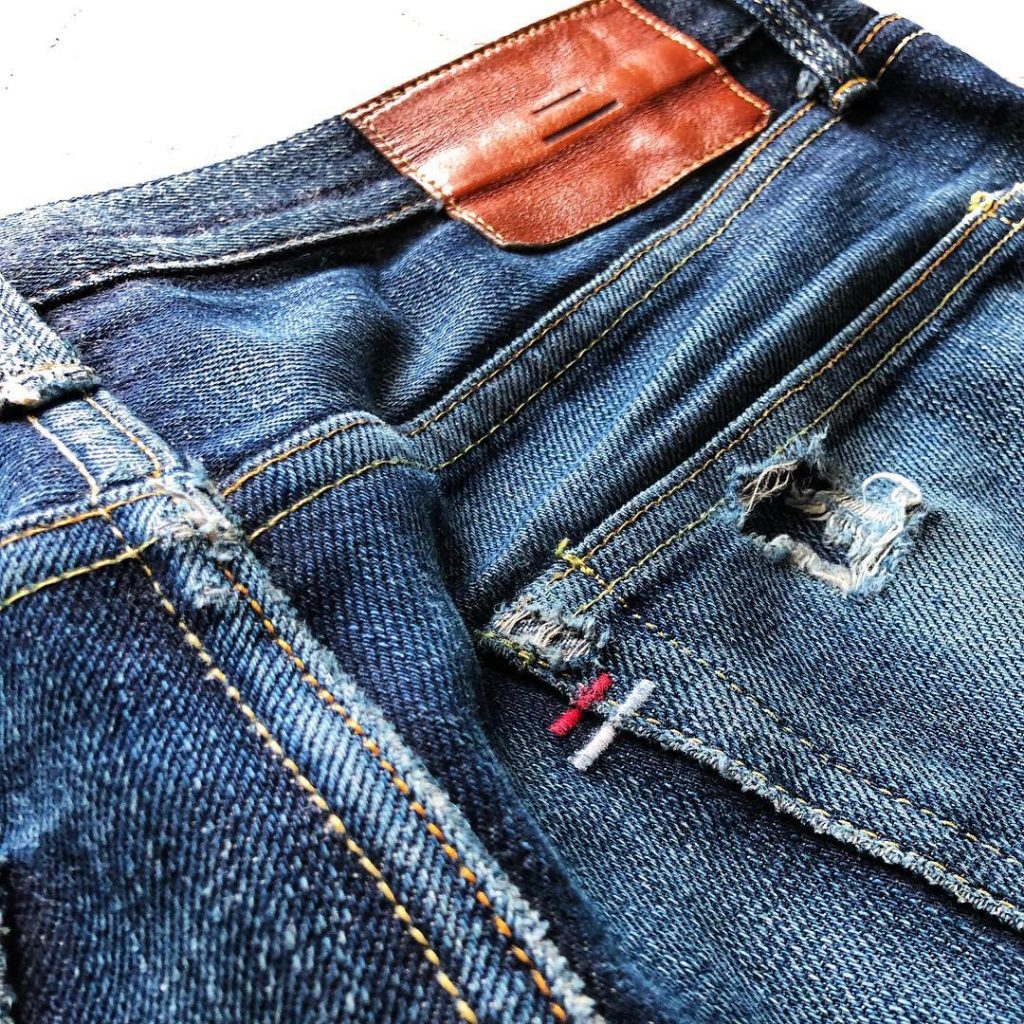
Tanuki is available at Redcast Heritage (ES) and Blue Beach Denim (TW)
TCB Jeans
Vintage Reproduction, Made In-House
TCB recreates classic American workwear from the 1920s–60s using vintage sewing machines and original denim, all produced in its own factory.
That hands-on control shapes both the jeans and how they’re made, giving the brand a more practical and grounded approach to vintage reproduction.

TCB is available at: Redcast Heritage (ES), Cultizm (DE), and Franklin & Poe (US)
Toys McCoy
Reproduction Rooted in Film and American Icons
Founded by former Real McCoy’s head Hiroshi Okamoto, Toys McCoy produces meticulously detailed garments rooted in vintage military and American casual wear.
Alongside that, the brand channels American pop culture—especially Steve McQueen and vintage racing—giving it a more character-driven and referential take on reproduction.

UES
Wear It Until It’s Gone
UES builds rugged, workwear-inspired garments using heavy, often textured fabrics and straightforward, durable construction, designed for long-term wear.
Rather than strict reproduction or refinement, the focus is on durability and character, with pieces that break in gradually and develop a distinct feel through consistent use.

UES is available at Redcast Heritage (ES), Brooklyn Clothing Co. (CA), Iron Shop Provisions (US), Franklin & Poe (US), Blue Beach Denim (TW)
Warehouse
Osaka Five Brand Focused on Vintage Accuracy
One of the Osaka Five, Warehouse approaches vintage American jeans through deep research, recreating the fabric and feel of pre-50s denim with exceptional precision.
A leader of Japanese repro, its Banner Denim has the softness and subtle fading of early Levi’s, while several sub-brands explore different periods and garments.

Warehouse is sold at Lost & Found (CA), Cultizm (DE), Hinoya (JP), and Clutch Café (UK).
How to Make Sense of Japanese Denim
Japanese denim is no longer a niche within a niche. It’s not a single style or philosophy either. Japan has a broad landscape of denim brands shaped by vintage obsession, textile innovation, and very different ideas about what jeans should be.
Some of the makers on this list chase perfect reproductions of mid-century American denim. Others push fabric, dye, and design in entirely new directions. That range is exactly what makes the scene so fascinating—and why one pair of Japanese jeans often leads to another.
Keep Track of What I’m Working On
I’m Thomas, founder of Denimhunters. Once a week, I send an email with what I’m working on and writing—new guides, deals, and things worth paying attention to.
The post The Definitive Guide to Japanese Denim Brands appeared first on Denimhunters.
DENIM and PATCHES sourced this post originally published on this site