Not All Denim Fades the Same: What to Look for When You’re Buying Jeans
If you’ve spent any time around raw denim, you’ve probably heard this advice repeated over and over: “To get fades, you need raw selvedge jeans.”
It sounds right. It’s easy to remember. And it’s not entirely wrong. But it’s also why people end up disappointed.
You buy the ‘right’ kind of denim, wear it consistently, but never get the result you expected. At that point, the question is obvious: “Why aren’t my jeans fading like the ones I see online?!”


More often than not, what you end up with instead is something closer to a pair of classic 80s or 90s Levi’s—slow, even fading, with little contrast. Nothing wrong with that, but it’s probably not what you had in mind.
This article is about the other outcome: denim that develops visible contrast and variation over time—and why some fabrics are built for that, while others aren’t.
TL;DR – Why “Raw Selvedge” Isn’t Enough
“Raw” and “selvedge” alone don’t determine how jeans fade—they only tell you the jeans aren’t washed and how the denim is woven. If the fabric isn’t built for contrast and variation, no amount of wear will create the fades you dream about.
You Don’t Create Fades, You Reveal Them
There’s a persistent idea in denim culture that fades are something you “earn” purely through wear. And while wear obviously matters a great deal, it’s only part of the equation.
What most people overlook is that the way the denim fades is largely decided before you ever put the jeans on.
At the fabric level, these stages of production set the direction:
- How the yarn is spun
- How the indigo is applied
- How the fabric is woven
The type of cotton used and how the fabric is finished also play a role, but the three above are the most influential.
These aren’t surface-level details. They define how the denim will respond to washing and wearing. Your daily wear patterns don’t create fades from scratch—they expose the potential that’s already built in.
Fades Start with the Yarn
The foundation for how denim fades is laid in the yarn.
If the yarn is highly uniform—consistent in thickness and engineered for efficiency, as with open-end spun yarn—the fabric surface will also be uniform. When that surface wears down, it does so evenly. The result is denim that gradually becomes lighter, but rarely develops much contrast or visual depth.
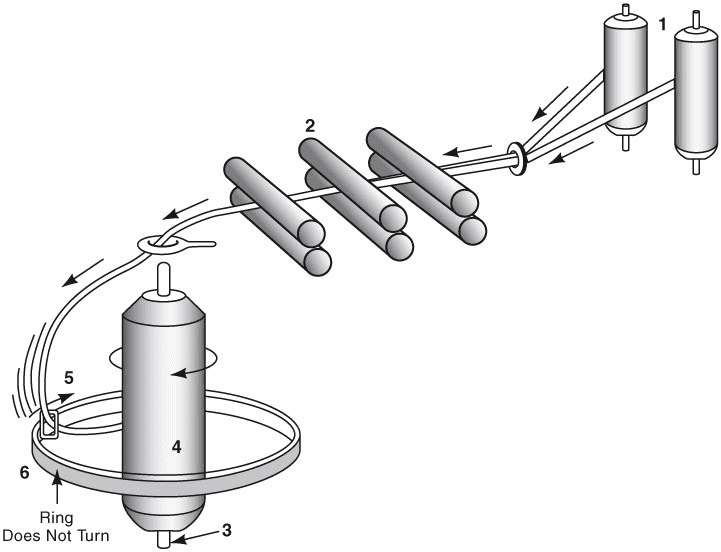
With ring-spun yarn, denim makers can engineer more structure into the yarn. The fibres are drawn out and twisted in a way that creates subtle irregularities—what are technically known as slubs.
These variations introduce small differences in the fabric surface—areas that sit slightly higher or lower, even if you don’t notice it when the jeans are new.

As the denim is worn and washed, those differences begin to matter. The raised areas are exposed to more friction and lose indigo faster, while the lower areas retain more colour. Over time, this uneven abrasion creates contrast—the sharpness and depth people associate with well-faded jeans.
If that irregularity isn’t there to begin with, the potential for contrast simply doesn’t exist.
Head spinning? The difference between ring-spun and open-end yarn—and how that affects fading—is covered in this Denim Encyclopedia entry.
Dyeing Determines the Contrast
Denim fades because of how indigo behaves.
Unlike most dyes, indigo doesn’t fully penetrate the yarn. It sits closer to the surface, leaving the core of the yarn lighter. As the fabric is worn, that outer layer gradually breaks down, revealing the lighter core.

But this isn’t just about the dye itself—it also depends on how the yarn is constructed.
With ring-spun yarn, where the fibres are more aligned and tightly twisted, the dye has a harder time penetrating deeply into the yarn. More of it stays near the surface, which makes it easier for wear to create visible contrast over time.

With open-end yarn, the structure is more open and less aligned. That allows the dye to penetrate deeper into the yarn, which makes the colour more resistant to abrasion—and the fading more gradual and even.
So it’s not just a question of whether denim is indigo-dyed. It’s about how that dye interacts with the yarn—and how resistant it is to abrasion.
Worth understanding in more detail: How indigo dyeing works—and why it behaves the way it does—is explained in the Denim Encyclopedia here.
Weaving Controls How It All Plays Out
Spinning and dyeing define the ingredients. Weaving determines how they come together.
When denim is woven with more variation—from irregular yarns, at lower tension—the surface becomes less uniform. That unevenness creates different contact points when the fabric is worn, meaning some areas are exposed to more friction than others.
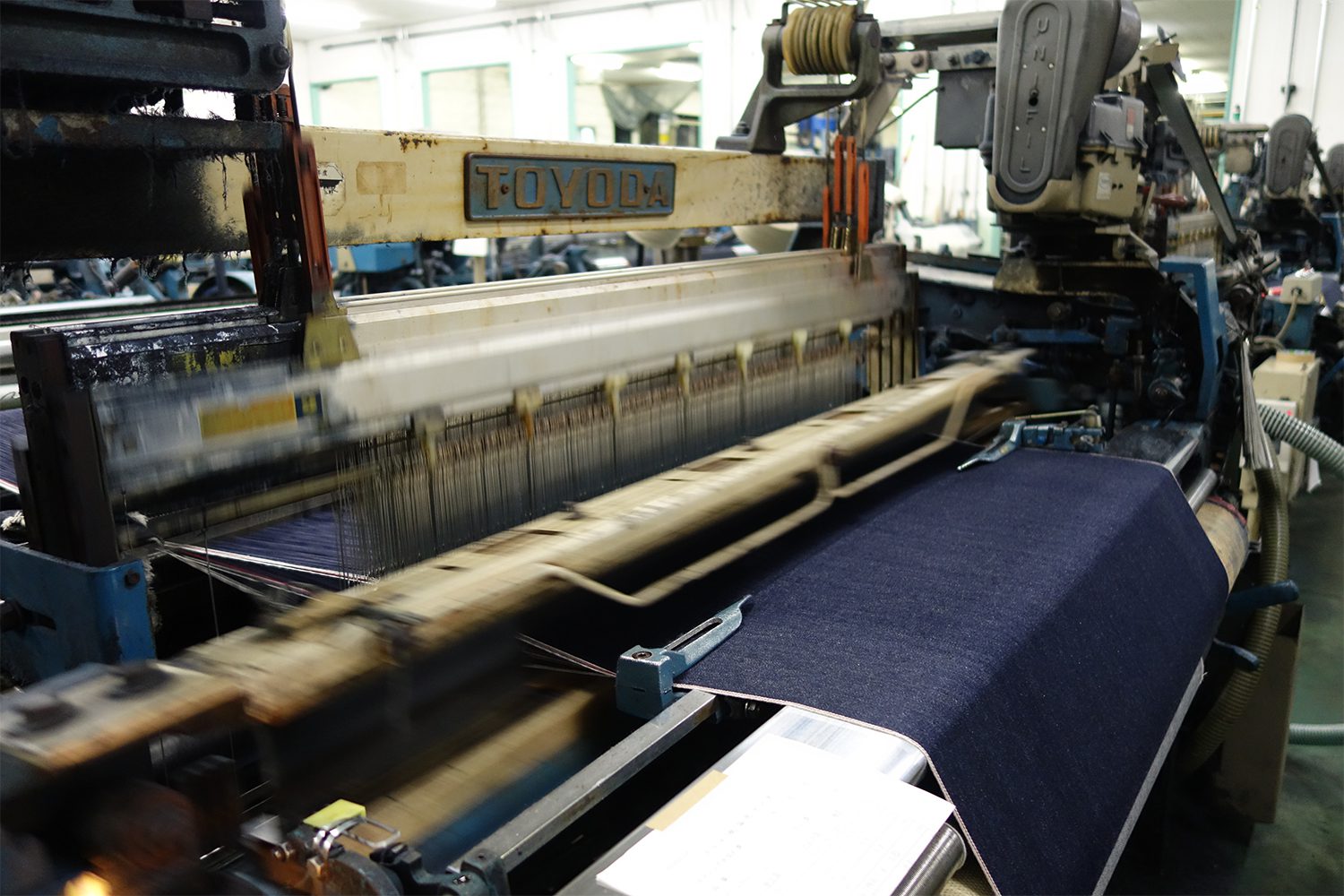
Over time, those differences translate into visible fading patterns.
With tighter, more controlled weaving, the surface is more consistent. Friction is distributed more evenly, and the result is a cleaner, more uniform fade.

Finishing also plays a role here. Treatments like singeing, sanforisation, or other post-weave processes can smooth or stabilise the fabric, which affects how quickly and how visibly the denim begins to change with wear.
Neither approach is inherently better. But they produce very different outcomes—and most people never realise that’s what they’re choosing between.
This is where things get more technical: If you want to understand how weaving, loom setup, and finishing processes like sanforisation affect denim, you can read more about it in the Denim Encyclopedia.
You Don’t Choose Jeans, You Choose Fades
By now, the pattern should be clear.
Denim doesn’t just fade—it fades in a specific way, based on how it’s made.
Some fabrics are built to stay consistent and wear evenly over time. Others are built to develop more visible contrast and variation. Neither is inherently better, but they lead to very different fades.

The problem is that most people aren’t told what they’re actually choosing between. Labels like “raw” and “selvedge” don’t explain it, and the differences only become obvious months after you start wearing the jeans.
That’s where the disconnect happens.
Apply this when you’re buying jeans: Helping you find jeans worth wearing is the whole point of this site. Since 2011, that’s what I’ve been doing—through detailed buying guides that break down what to look for in practice. If you find something you like and decide to buy, I may earn a small commission.
Where This Leads
After years of explaining this—on this site, in shops, and working with brands—I’ve seen the same pattern. People either had to learn all of this to make a good decision, or they ended up guessing and hoping for the best.
That gap is what led me to start working on my own jeans brand, Weirloom.

Not to chase extremes, but to apply these principles in a way that gives a clear and reliable outcome—denim that fades with visible contrast and variation—because it’s built for that from the start.
If you’re curious what that looks like in practice, you can see the jeans here:
The post Why Some Denim Doesn’t Fade the Way You Want appeared first on Denimhunters.
DENIM and PATCHES sourced this post originally published on this site