• Skip to main content
  • Skip to footer

DENIMandPATCHES

we sell DENIM and PATCHES

  • Home
  • About
  • Blog
  • Gallery
  • How To
  • Cart
    • Checkout
    • My account
  • Contact

DENIMandPATCHES

10 Menswear Classics That Will Never Go Out of Style

February 27, 2026 by DENIMandPATCHES

Stop Chasing Trends and Start Investing in These Through Line Pieces

When researching for our book, The Rebel’s Wardrobe, we looked through thousands of photographs of the twentieth century’s most stylish rebels.

We noticed that, while fashion trends came and went, stylish rebels (past and present) gravitate to the same rugged pieces.

Photo by Sanford Roth, 1955

Together, these pieces form a kind of through line that connects the rugged rebels of every age to each other. It’s what would allow us to drop a mid-century rebel like James Dean or Marlon Brando into the middle of Times Square today (or any other day) without them seeming out of place.

These pieces aren’t just stylistic curiosities that have held out interest. They’re assets in any wardrobe, and they’re worth investing in.

Photos by Teruyoshi Hayashida from the Japanese edition of Take Ivy (1965)

Why Invest in Timeless Pieces

Well-made clothing is an investment, and any investment is a gamble. It’s relatively easy to justify a modest spend on an on-trend item, but, as with any small stake, the pay-out is fleeting. There’s a quick sugar-rush-like high, and then we’re on to chasing the next trend.

The through line pieces—especially when they are well-made—are appreciating assets. They age slowly and gracefully, repaying their investment not in novelty but in longevity.

Cuts and scars might consign an on-trend piece to the rag heap. For the well-made through line piece, though, signs of wear and tear are badges of honour, conferring rather than subtracting value.

New to Rugged Menswear? Start with Jeans, Tees, and Boots

Telling you to invest in a great pair of selvedge jeans, some quality tees, and a pair of sturdy leather boots is likely to be advice you’ve heard before.

But if you’re new to this scene, or just want to brush up on the basics, start your hunt with these guides:

RAW DENIMS

QUALITY T-SHIRTS

LEATHER BOOTS

The Timeless Ten: Menswear’s Through Line Pieces

These ten through line pieces form the backbone of a rugged, enduring wardrobe. They cover workwear, military, Ivy League, and naval tradition. Different origins. Same through line.

The list in hard-wearing shirts like the chambray and the heavy flannel; outerwear staples like the peacoat, the denim jacket, and the M-65 field jacket; underdogs like the rugby shirt, the Breton, and penny loafers; the fisherman’s sweater; and, finally, the crew neck sweater that starts it all.


MENSWEAR CLASSIC #1

The Grey Crew Neck Sweatshirt

In 1926, Bennie Russell was a varsity quarterback at the University of Alabama. The wool sweaters the team practiced in were hot, itchy, and difficult to launder, so he asked his father, founder of Russell Manufacturing Co., to make him something better suited to athletics.

His father responded by producing a heavy version of the long-sleeved cotton shirt his company was then making for women. Athletes flocked to the sweatshirt, quickly making it a fixture on tracks and fields around the country. 

An early version of the sweatshirt in a photograph likely taken in the early ‘30s

Following the war, when campuses took a turn towards a more casual collegiate style, the sweatshirt (often with the flocked lettering pioneered by Champion) became one of the defining pieces of Ivy style–a key point of inspiration for Japanese designers.

Most of us have at least a few inexpensive sweatshirts kicking around in our wardrobe already. The difference between these mass-produced sweatshirts and the genuine article can’t be fully appreciated until you’ve worn one of the latter. Definitely worth investing in. 

Bahzad of Wonder Looper modelling their classic grey crewneck

While sweatshirts are available in nearly every imaginable colour, it’s the classic grey, with its long athletic and casual pedigree, that belongs in every single wardrobe. Our favourite versions are produced in Japan, Germany, and Canada.

Our Favourites Crew Necks:

  • Buzz Rickson’s Sweatshirt
  • Wonder Looper Sweatshirt

MENSWEAR CLASSIC #2

The Chambray Shirt

It wasn’t until early in the twentieth century that the button-up shirt as we know it began to emerge. Until then, the buttons on a shirt would terminate around the sternum or navel. Shirts would be unbuttoned and then pulled over the head.

“Jacket-style” shirts, which unbuttoned all the way to the waist, quickly crowded pull-overs out of the market, setting the stage for the emergence of a true-blue American workwear icon: the chambray shirt.

1904 and 1920 ads for chambray work shirts – Both photos from Rite Stuff

In the 1920s and ‘30s, American brands like Big Yank, Montgomery Ward, and Hercules produced chambray work shirts that became a kind of unofficial uniform for the working man. Soft, durable, and easy to launder, chambray work shirts are the original “blue collar” shirt. 

Over the last century, chambray has worked its way into nearly every facet of menswear. A close cousin of denim, the fabric is at its best when approached reverently and nostalgically by heritage brands that respect the shirt’s long lineage.

In either work or western versions, chambray shirts are a no-brainer. They pair brilliantly and easily with selvedge denim. They look great when new, but they really come into their own when they’ve been washed down and baked in the sun. 

Our Favourites Chambrays

  • Heimat Arbeitshemd
  • Buzz Rickson’s Chambray Work Shirt
  • Real McCoy’s 8HU Chambray

Or find your favourite in our in-depth chambray guide here.


MENSWEAR CLASSIC #3

The Rugby Shirt

The rugby shirt is equal parts gentility and brutality. With its white collar, buttoned placket, and often-vibrant school colours, it betrays some of its origins in England’s upper-crust public schools. At the same time, it seems to cry out for collision and carnage.

The bone-rattling sport was born in England in 1823 at Rugby School in the West Midlands. At first, players wore white collared shirts and matching trousers. It was utter chaos for spectators, with nothing to distinguish the players from each other other than knit caps (one team would wear red, the other blue). 

Australian ruggers in 1941 – Photo from Saint George Dragons

When English footballers started wearing vertically striped cotton jerseys, rugby players followed suit, opting for collared jerseys with brightly coloured horizontal hoops that helped distinguish them from footballers but, more importantly, from each other.

Photo from Grailed

They were worn almost exclusively as a display of school and team spirit until English rebels like Mick Jagger and Oliver Reed started wearing rugby shirts in whatever colours pleased them. This helped permanently shake the rugby shirt loose from its academic and athletic roots.

To lean into the rugby’s rough and tumble reputation, wear it slightly askew. Unbutton the placket and let the collar roll or stick out at awkward angles. Don’t iron it into shape or cover it with layers. It’s a rough and tumble shirt. It doesn’t need much help.  

Our Favourite Rugby Shirts

  • J. Press ‘Made in America’ Rugby
  • Heimat Raglan Rugby
  • Barbarian 4-Inch Stripe Rugby

MENSWEAR CLASSIC #4

The Peacoat

Double-breasted and made from extremely heavy wool, the peacoat was for centuries the sailor’s best foul-weather friend. While Dutch sailors pioneered the design in the eighteenth century, it was English and then American sailors who made it iconic.

Sailors adored the peacoat. The double-breasted jacket could be fastened across the body in either direction (depending on which way the wind is blowing), and the handwarmer pockets sit high on the body. Thrust your hands in the pockets and the jacket tightens around you. 

An American sailor in Iceland – Photo from Sally Gary

The jacket’s most striking feature—its large ulster collar—can be turned up and, in particularly nasty weather, fastened with a throat latch. The turned-up collar not only keeps the throat warm, it also frames the face brilliantly—an unmatched combination of substance and style.

After WWI and WWII, sailors made landfall with their peacoats tucked under their arms, and these jackets (along with mountains of surplus and civilian versions) quickly became a go-to piece of outerwear for style-conscious rebels on both sides of the Atlantic.

Robert Redford in Three Days of the Condor: Paramount Pictures

The best modern versions of the peacoat capture all of the brawny brilliance that made the piece such a formidable opponent. With extremely heavy melton shells, large collars, and corduroy-lined pockets, they’re ready to do battle with the elements. Turn the collar to the wind and set sail.

Our Favourite Peacoats

  • Buzz Rickson’s Peacoat
  • Cockpit USA Admiral Peacoat

Want more options? Visit our guide to naval jackets here.


MENSWEAR CLASSIC #5

The Penny Loafers

Around the end of the nineteenth century, wealthy English fishermen flocked to the Norwegian fjords looking for the world’s best fishing. The Lords of Salmon returned to England with more than just their catch. They adopted a leather slip-on the Norwegians called the teser shoe.

Norwegian shoemaker Nils Tveranger – Photo from Aurlands

One Norwegian shoemaker, Nils Tveranger, who had apprenticed as a shoemaker in Boston before WWI, saw an opportunity and, incorporating a moccasin-style gathered toe stitch, introduced the first recognisable penny loafer. 

His shoes spread among the upper classes in England, making the rounds at exclusive resorts on both sides of the Atlantic. In Palm Beach, the shoes were spotted by the founder of Esquire magazine, who quickly partnered with G.H. Bass to produce Weejuns (a nod to the shoe’s Norwegian roots).

The Bass Weejun – Photo from G.H. Bass

Inexpensive and stylish, the shoes were quickly adopted by young Americans, who began pairing them with jeans and white socks in the ‘40s. The “sloppy look” as it was dubbed at the time started with young women, with men quickly following suit. American college students gave the shoe its most enduring name when they started slotting pennies into the vamp sometime in the ‘50s.

Selvedge denim and penny loafers make for a combination as dynamite as ever, and the shoes make an ideal alternative to boots in the summer months. Invest in a good pair and they’ll age and patinate brilliantly. The very definition of casual elegance.

Our Favourite Penny Loafers

  • Alden Penny Loafer
  • Grant Stone Traveler Loafer

MENSWEAR CLASSIC #6

The Heavy Flannel Shirt

An Iron Heart UHF styled by the good people at Withered Fig

Originating as a kind of coarse and heavy overshirt worn by sixteenth-century Welsh farmers, flannels found their true calling in the boreal forests of the American north. Warm, rugged, and highly visible (a key safety feature), flannel shirts and jackets became a kind of uniform for American and Canadian loggers.

Lumberjacks in Michigan (1925) – Photo from Minnesota Historical Society

In 1850, Woolrich Woolen Mills made their first foray into the garment game with the now-distinctive red and black buffalo plaid. When stories began to circulate about a mythical, larger-than-life logger named Paul Bunyan, he wore the logger’s uniform: jeans, suspenders, and the buffalo plaid flannel.

Pendleton performed a similar trick when, in 1924, they debuted their first Virgin Wool Shirt. While flannels and working cowboys were hardly strangers, Pendleton’s plaids caught fire in the western scene. By the middle of the century, Pendleton’s plaid wool flannels were everywhere.

Brian Wilson of the Beach Boys wearing a Pendleton – Photo from NYT

From the surf scene of the ‘60s to the grunge rockers of the ‘90s, from field and stream to campus and coffeehouse, plaid flannels, made increasingly from brushed cotton rather than wool, worked their way into the very heart of American culture and its countless subcultures.

As selvedge denim weights climbed in the early aughts, flannels packed on the pounds as well. Today, extraordinarily heavy flannels are a staple of the heritage scene. Virtually indestructible, these heavy flannels are as essential as they are immortal.

Our Favourites Heavy Flannels

  • Iron Heart UHF
  • Flat Head Flannel
  • UES Heavy Flannel

There are a lot of great heavy flannels out there. You’ll find the best of the best in our flannel guide.


MENSWEAR CLASSIC #7

The Type II or Type III Denim Jacket

Levi’s first version of the denim jacket was a simple, utilitarian design. A boxy fit with just a single chest pocket, the Type I as it was called later lasted for half a century, serving the needs of American farmers, miners, cowboys, and factory workers.

An early Levi’s advertisement – Photo Credit: Getty Images

By the end of WWII, though, denim was heading in new directions. No longer merely a working man’s fabric, denim had a mile-wide rebellious streak. Sensing a shift in their market, Levi’s updated their denim jacket, trimming some fat and adding a second chest pocket to make it more symmetrical.

The resulting Type II jacket, which debuted in 1953, gave double denim looks an altogether new kind of sex appeal. With the help of rebel icons like Elvis Presley and Eddie Cochran, the new breed of denim jacket (and the rebels who wore it) defied authority and convention.

Martin Sheen in a Type II jacket in Badlands (1973): Warner Bros.

Levi’s completed the hat trick in 1962 with their Type III. Born iconic, the Type III, with its trimmer cut, higher chest pockets, and vee-shaped stitches running from the pockets down to the waist, became the de facto denim jacket for the generation that would change everything.

Type II (left) and Type III (right)

The legacy denim brands lost some of their magic touch when denim exploded as a global consumer staple, but Japanese denim purists pulled American workwear back from the brink. Their versions of the classic denim jackets capture some of the magic that help make the originals eternal and are well worth investing in.

Our Favourite Denim Jackets

  • Iron Heart 526J
  • Sugar Cane Type II
  • Flat Head Type III

A good denim jacket is a must-have for any serious denimhead. We’ve rounded up all our top pick in this guide.


MENSWEAR CLASSIC #8

The Fisherman’s Sweater

Our appreciation for the combinations of indigo and cotton runs bedrock deep, but wool isn’t far behind. We know from experience, when it comes to that long battle with the elements that is the Scandinavian winter, wool is a true wonder.

Photo from Wick Society

Atlantic fishermen have long understood this. The classic fisherman’s sweater, likely originating in Guernsey, one of the Channel Islands between England and France, was a tightly knit and slim-fitting sweater made from oiled worsted wool.

Often knit for fishermen by their wives or mothers, the typical fisherman’s sweater would require around 100,000 stitches, taking months to complete. It would be knit symmetrically so that it could be worn with either side facing forward–crucial when dressing in the dark or in a hurry.

The sweaters became a kind of folk art in the fishing communities up and down the Atlantic coast. Patterns were passed down from mother to daughter. Rarely recorded, they were stored in the muscle memories of generation upon generation of the hardy and patient women of the North Atlantic.

Heimat sweater styled by Huckberry

The sweaters first became commercially available in the ‘30s and ‘40s, and, with the help of early adopters like Grace Kelly and Elvis Presley, they quickly became a wardrobe essential. Buy a good one in a classic colour (dark blue or cream) and you’ll only ever need one.

Our Favourite Fisherman’s Sweaters

  • Heimat U Boot Rollneck
  • SNS Herning Fisherman’s Sweater
  • Left Field Sweater

These are just the tip of the iceberg. Dive deeper with our guide to fisherman’s sweaters.


MENSWEAR CLASSIC #9

The M-65 Field Jacket

Militaria slips in and out of style, often playing around on the margins of the mainstream when it’s not enjoying a strong resurgence. The M-65, though, has managed to transcend trends. Since its debut in the ‘60s, it has remained on the front lines of style.

Real McCoy’s textbook version of the M-65

The field jacket issued to American soldiers during the Vietnam War was the culmination of a long period of development. Its popular predecessors, the M-43 and M-51, had served soldiers well in WWII and Korea, but jungle warfare in Vietnam demanded an updated jacket.

Alpha Industries, makers of the iconic MA-1, won the bid to redesign the field jacket. They piled on the innovations, adding a NYCO (a nearly indestructible nylon-cotton blend) shell, a detachable liner, and, most iconic, a zippered collar that concealed a water-resistant hood.

Stallone in Rambo: First Blood (1982): Orion Pictures

When soldiers returned to American shores, it was to a changed America. Battle lines were drawn, and the M-65 found itself on both sides of the conflict. The jacket became a blank canvas, changing meaning radically depending on how it was embellished and worn.

With its striking and immediately recognisable silhouette, the M-65 has won legions of new admirers and adopters with each new generation. From Travis Bickle and Frank Serpico to John Rambo and Public Enemy, the M-65 hasn’t lost a single ounce of its defiant attitude.

Our Favourites M-65 Jackets

  • Iron Heart M-65
  • Buzz Rickson’s M-65
  • Cockpit USA M-65

MENSWEAR CLASSIC #10

The Breton

The sun never sets on the Breton. Perpetually basked in a continental beachside glow, it raises the temperature slightly in every room it enters.

The most essential feature of the breton (called a marinière or tricot rayè by the French) is the pattern–dark blue stripes on a white background. While most modern versions are cotton, the original was wool, and it was worn by French fishermen in Brittany (in northwest France).

The French Navy made the breton the official uniform of French sailors in 1858. Short in the sleeve and wide enough in the neck to expose the collarbones, the shirts were easy to get on and off, even when wet, and they made sailors easy to spot in the rigging. 

With the help of Coco Chanel, the iconic stripes became a fixture on continental beaches following WWI. At the same time, it flexed its muscle on screen, with brawny actors like John Wayne, Kirk Douglas, and Marlon Brando all showcasing the breton’s rugged potential.

Photo from Style Francais

While there are literally thousands of shirts that look the part on the market today, there’s a big difference between horizontally striped shirts and true-blue bretons. Look for something traditional–preferably made in France. When the sun comes calling, you’ll be glad you did.

Our Favourite Bretons

  • Armor Lux Breton
  • Orchival Breton

Want to Explore Beyond the Timeless Ten?

Most of the pieces above are explored in depth in The Rebel’s Wardrobe, where we trace the history of more than 40 menswear icons—from denim jackets and peacoats to Breton stripes, penny loafers, and beyond.

The book examines how these garments emerged, evolved, and ultimately earned their place as menswear classics. You can get a copy here.

But the education doesn’t stop with the book. If you’re ready to invest, explore our buying guides for jeans, jackets, boots, and other staples here. And if you want to understand the craft—dyeing, weaving, construction, and fading—our in-depth denim knowledge section breaks it all down.

Different entry points. Same through line.

Understand the Details That Matter

I’m Thomas, founder of Denimhunters. I write emails that go deeper into denim—how jeans are made, why details matter, and how to make better choices without the noise.

GET MY EMAILS

The post 10 Menswear Classics That Will Never Go Out of Style appeared first on Denimhunters.

DENIM and PATCHES sourced this post originally published on this site

Filed Under: Blog

Why Heavyweight Denim Is Popular Among Motorcycle Riders

February 12, 2026 by DENIMandPATCHES

Why Heavyweight Denim Is Popular Among Motorcycle Riders

Why Heavyweight Denim Is Popular Among Motorcycle Riders Motorcycle culture has always been shaped by a blend of freedom, craftsmanship, and practical design. From the machines themselves to the gear riders choose, every detail reflects a balance between personal style and real-world performance. Of all the fabrics that have endured…

DENIM and PATCHES sourced this post originally published on this site
Filed Under: Blog

Denimsandjeans Egypt 2026: Post Show Report

January 23, 2026 by DENIMandPATCHES

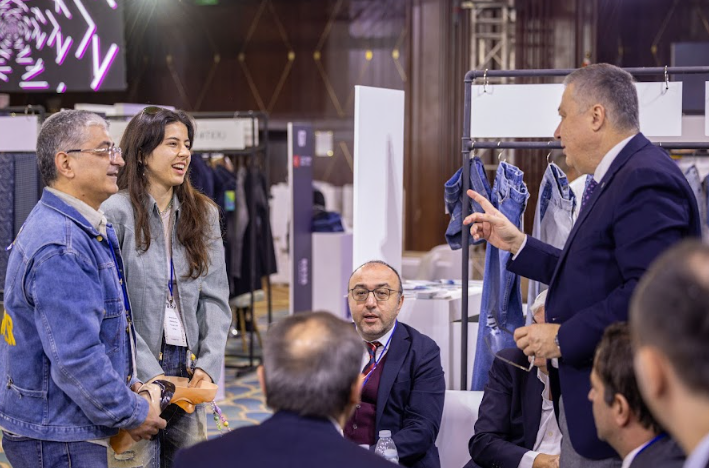
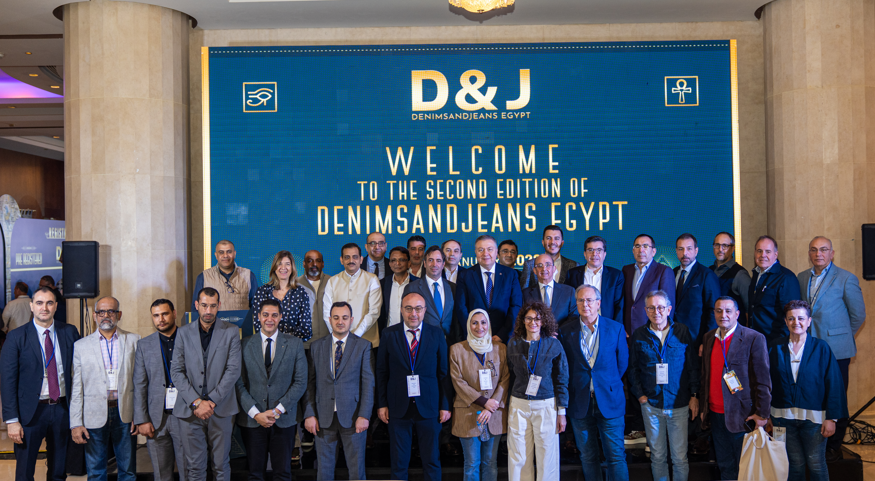
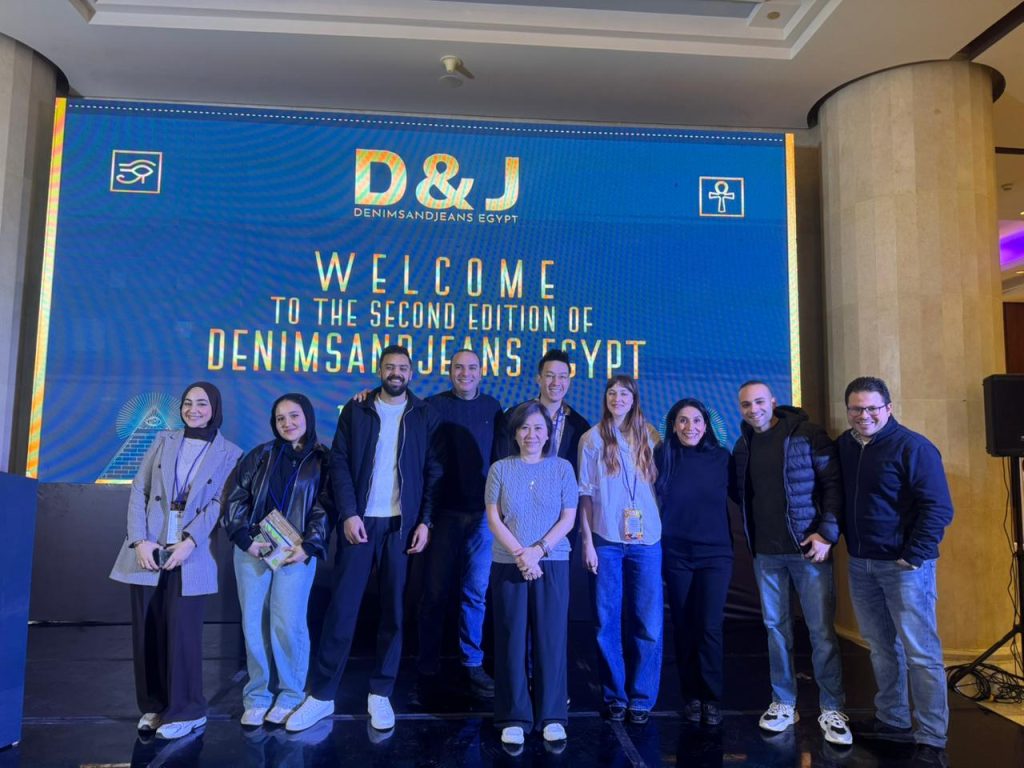
Denimsandjeans Egypt 2026 concluded successfully, bringing together the global denim value chain in Cairo over two days. The event continued to strengthen Egypt’s position as a strategic sourcing and manufacturing hub. At the same time, it offered focused discussions on innovation, sustainability, design, and investment opportunities within the denim industry.

Visitor Profile and Attendance

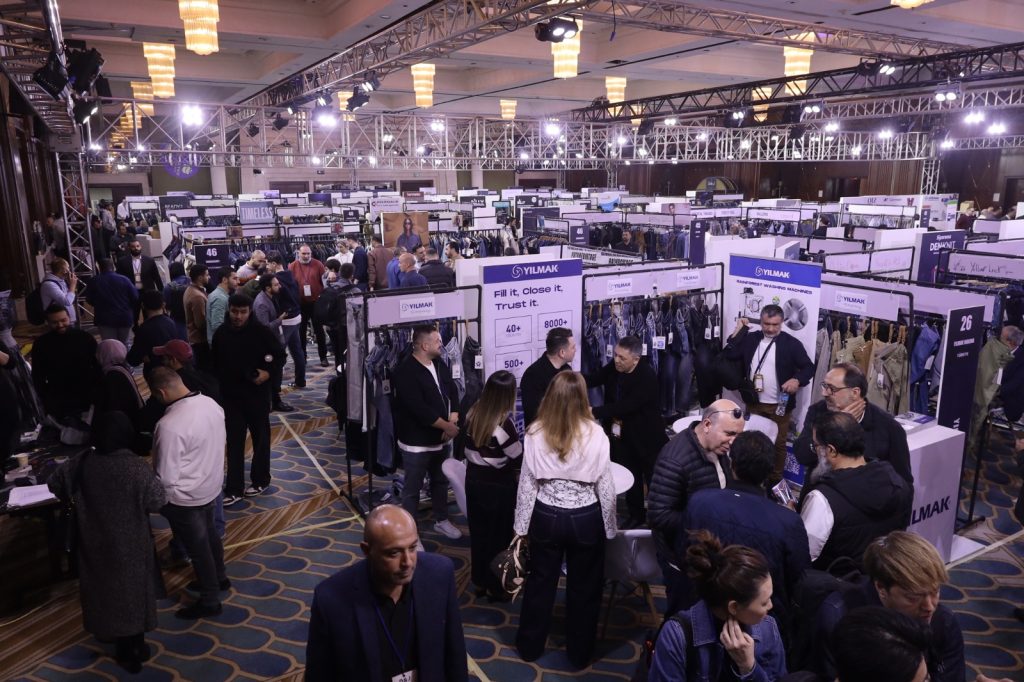
The show welcomed 1,056 visitors across both days, with strong international representation. Visitors included sourcing teams, designers, and decision-makers from New York, Asia, MENA and across Europe.

Key international brands in attendance included Uniqlo, Rag & Bone, Centric Brands, Ann Taylor, PacSun, Abercrombie & Fitch, Mango, Hugo Boss, H&M, Inditex, Bestseller, Worldbox, LPP, Next Sourcing, and Kontoor Brands. In addition, the show saw significant participation from major Turkish brands such as LC Waikiki and Colin’s and Defacto. Alongside this, prominent Egyptian brands including Concrete, Be Indie, and others were also present.

This mix of global and regional brands reinforced the show’s role as a focused platform for sourcing, collaboration, and industry dialogue.

Exhibitor Overview and Supply Chain Representation

D&J Egypt featured 80 exhibitors, offering an overview of the complete denim supply chain. The exhibitor mix included fabric manufacturers, garment producers, accessory and trim suppliers, chemical and dye specialists, washing and finishing technology providers, machinery companies, and sustainability solution experts.

A notable highlight was the collaboration with ITHIB, which brought 23 Turkish companies to the show. In total about 30 Turkish exhibitors participated, alongside 20 Egyptian companies, with the remaining exhibitors representing other key denim-producing regions. Together, they presented a view of denim manufacturing capabilities and innovations.

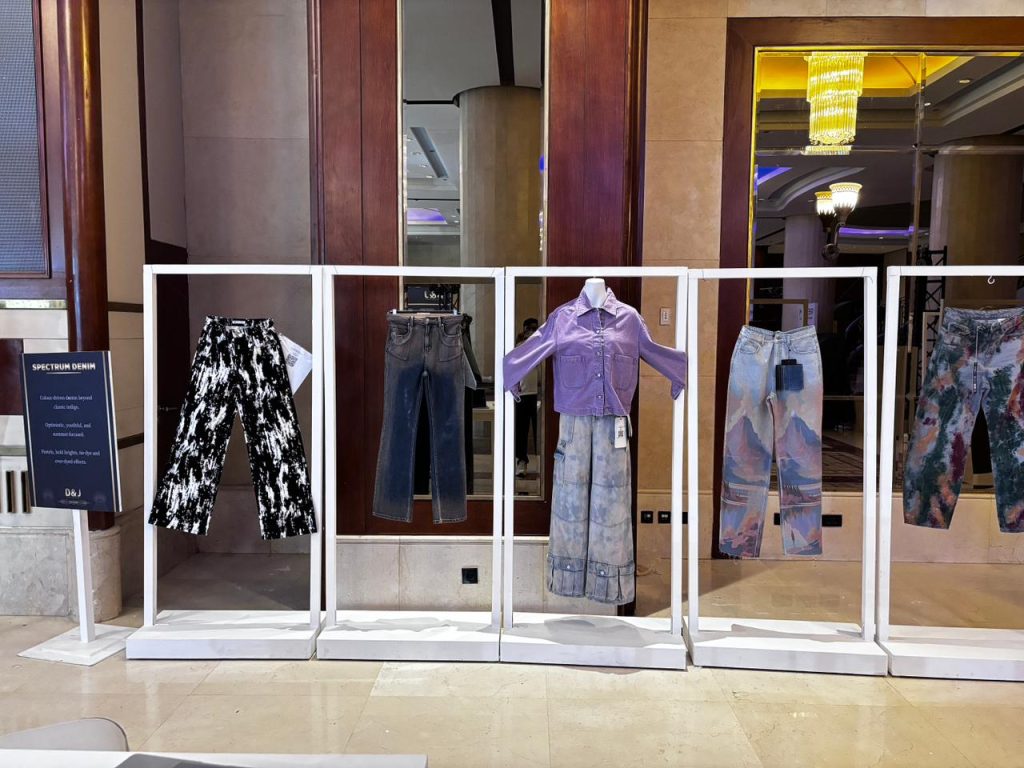
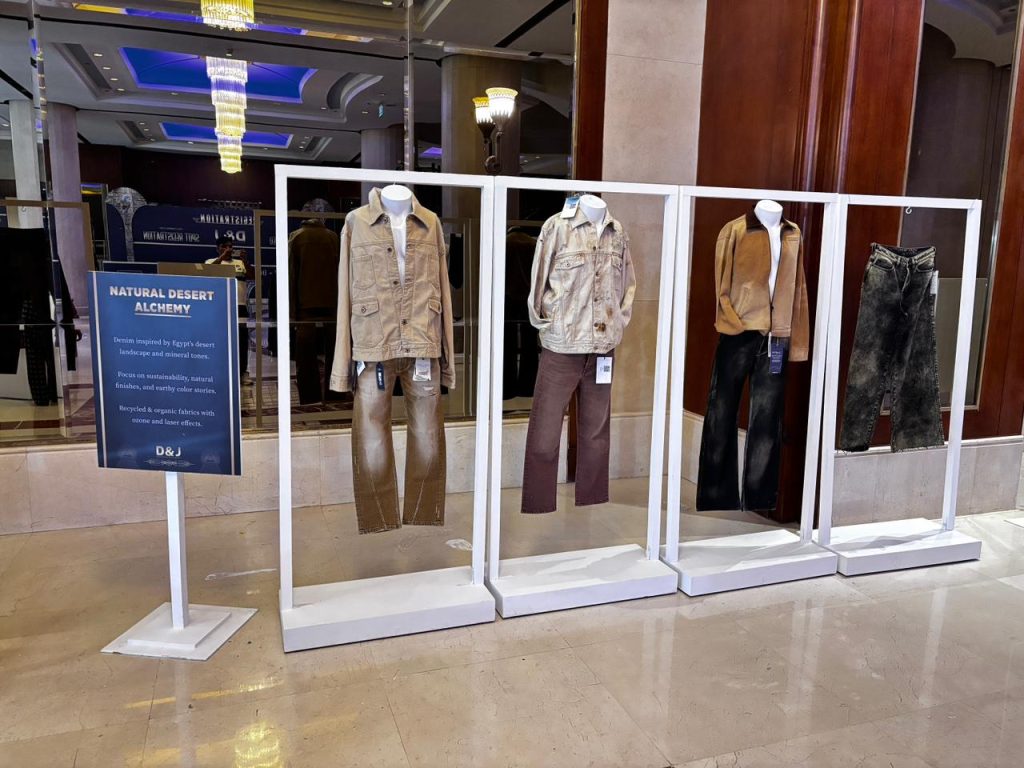
Trend Area Highlights

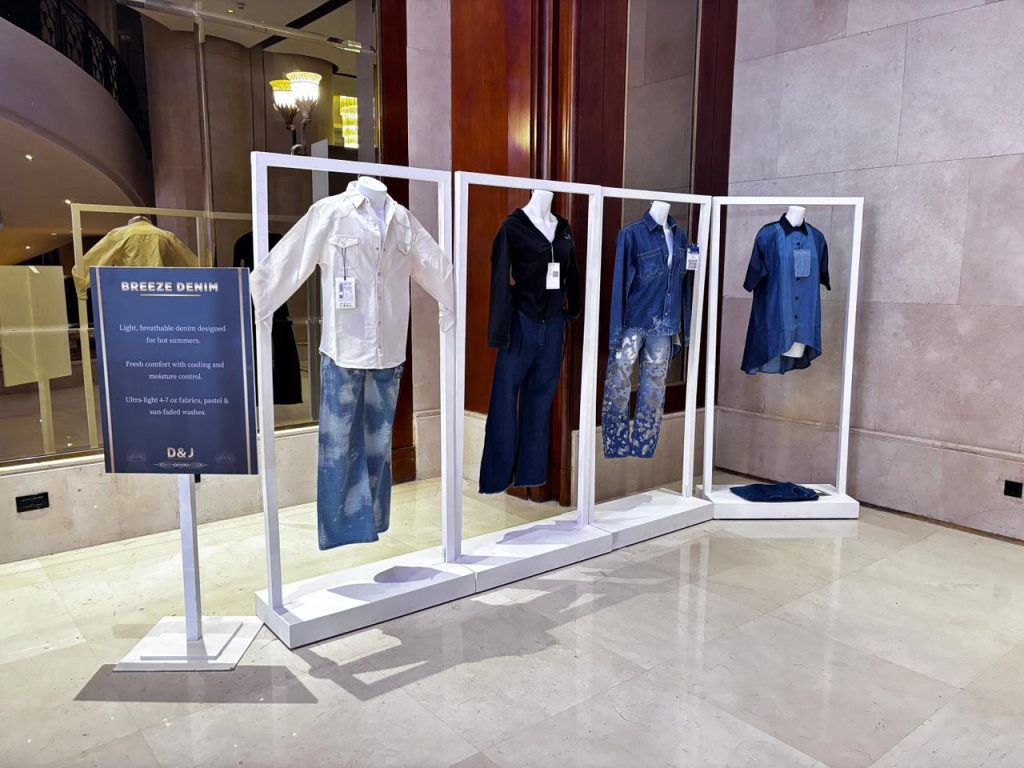
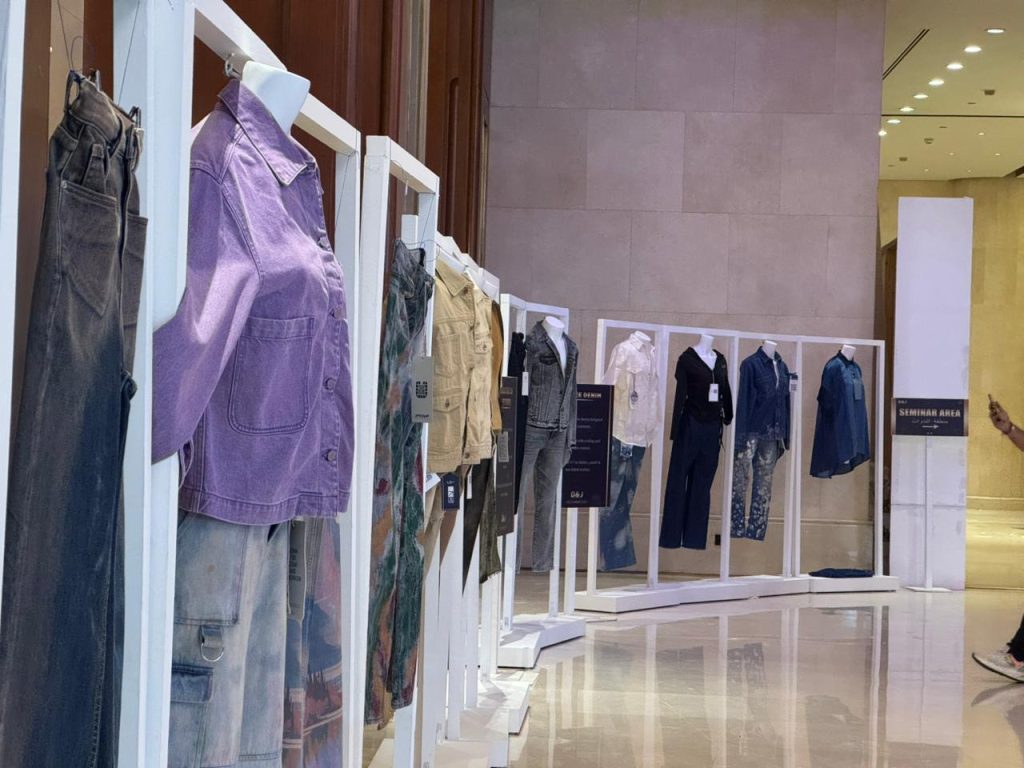
Meanwhile, the curated Trend Area reflected both regional inspiration and global denim directions. Overall, it focused on sustainability, comfort, and creative expression.

Workshops and Creative Engagement

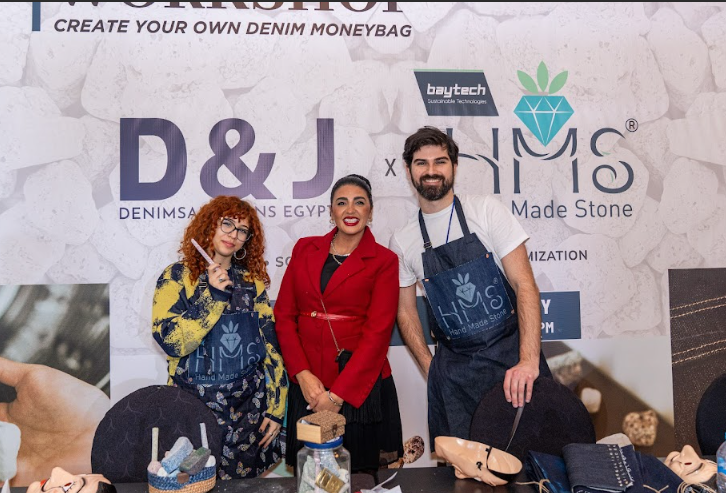
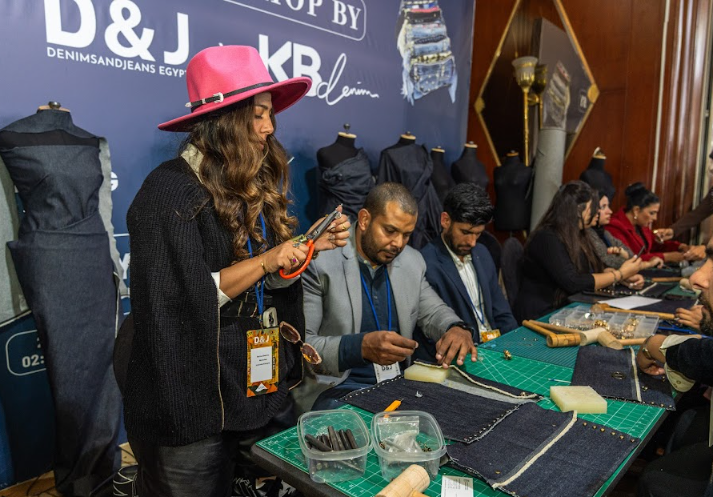
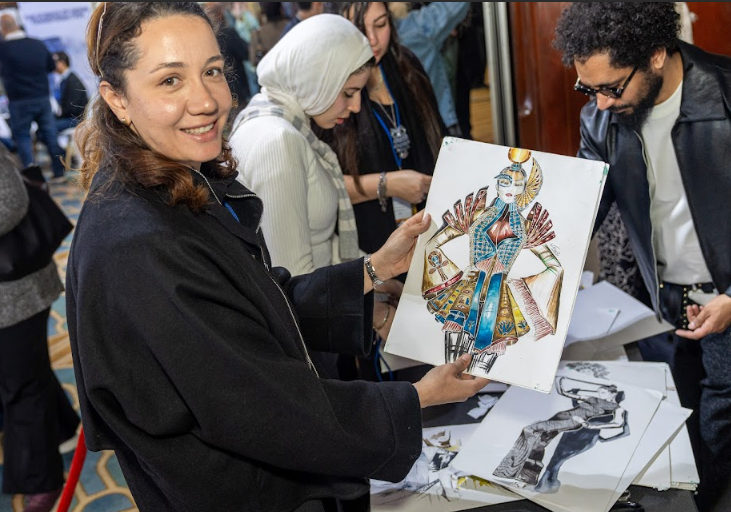
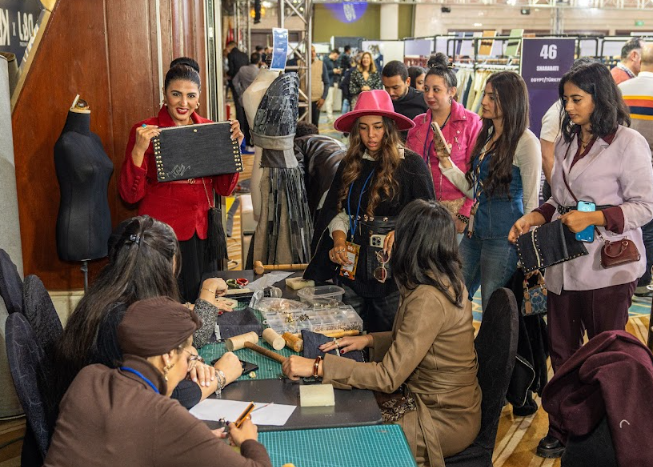
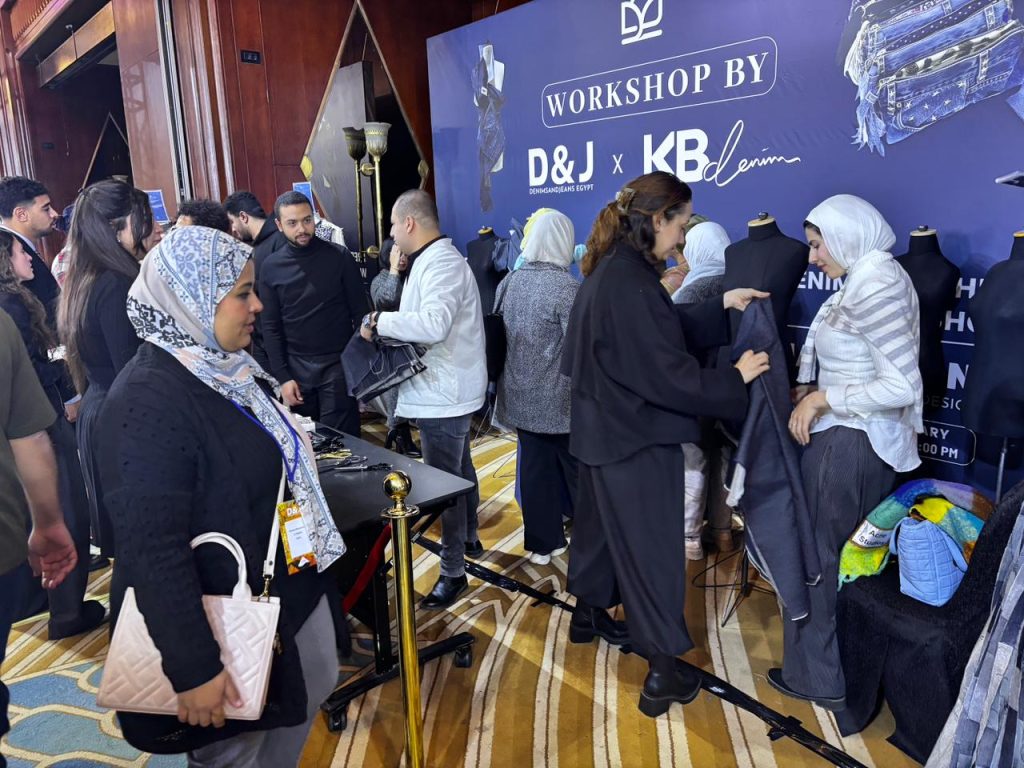
Workshops played a key role in engaging designers, students, and industry professionals through hands-on learning and experimentation. In collaboration with KB Denim and HMS Washing, a series of creative sessions were hosted throughout the two days.

Workshops were organized by KB Denim and HMS . KB denim Workshops included:

  • Denim Clutches Workshop by Marina El Belony, Bags & Belts Designer, focusing on craftsmanship and accessory design using denim.
  • Free-Hand Draping Workshop by Waleed Khairy, Fashion Designer and CDD Co-Founder, exploring form, movement, and creative construction directly on the body.

HMS Workshop conducted the immersive “Cairo Denim Heist” session. During the workshop, participants used tools such as the HMS Designer Pen and HMS Moons to create fade effects on denim money bags. The workshop demonstrated water-free techniques, emphasizing innovation without water waste or sludge generation.

Together, these workshops highlighted denim’s creative potential. At the same time, they reinforced the importance of sustainable production practices.

Panels, Talks, and Industry Discussions

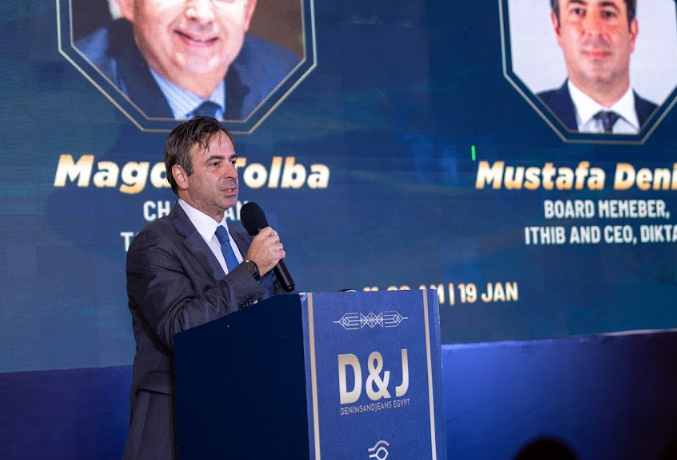
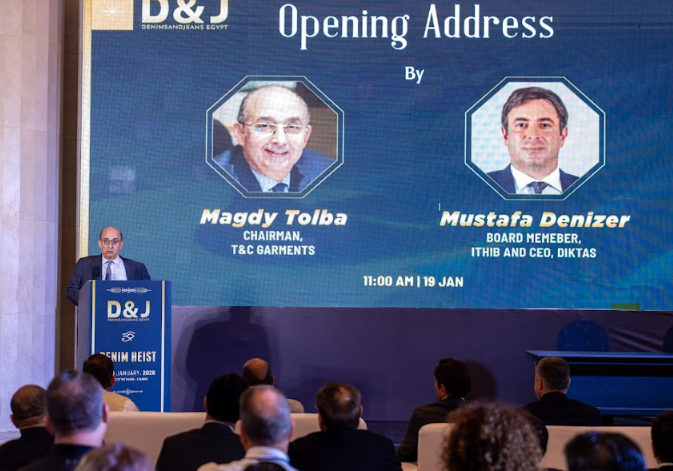
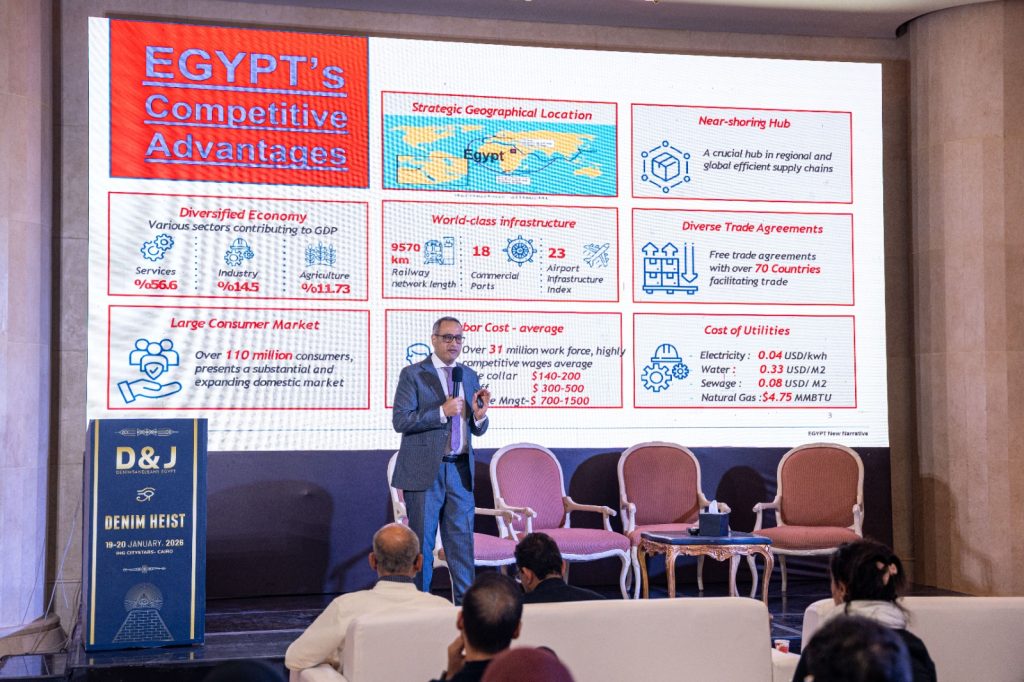
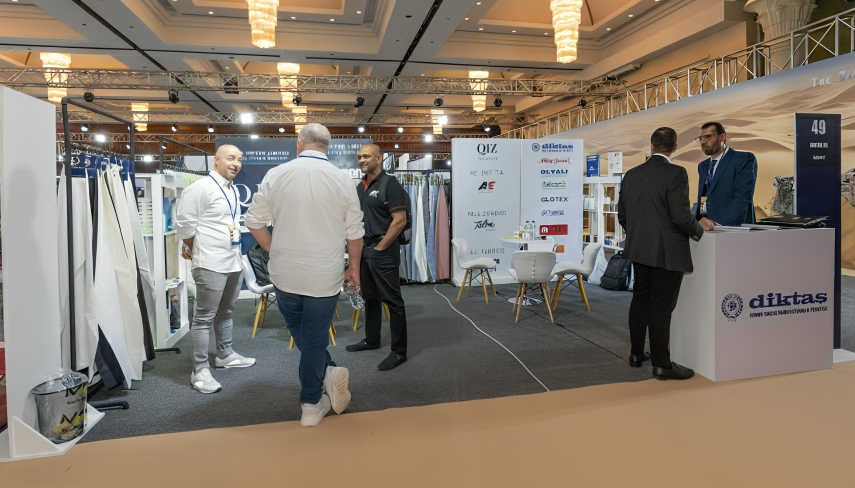
The event opened on January 19, 2026, with an Opening Ceremony. Mr. Magdy Tolba, Chairman of T&C Garments, shared insights on Egypt’s growing potential within the global textile and apparel industry. This was followed by remarks from Mr. Mustafa Denizer, Board Member of ITHIB and CEO of Diktaş, highlighting Turkey-Egypt collaboration.

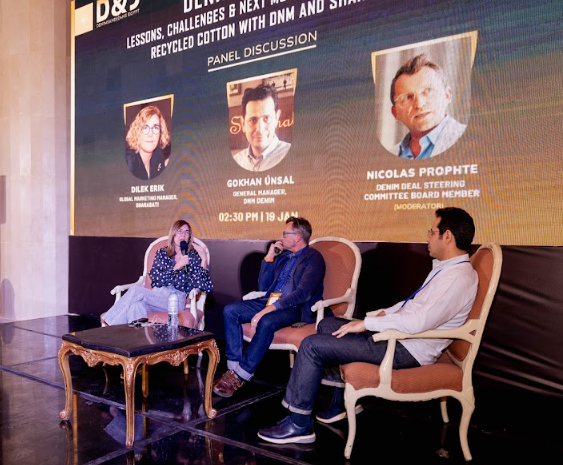
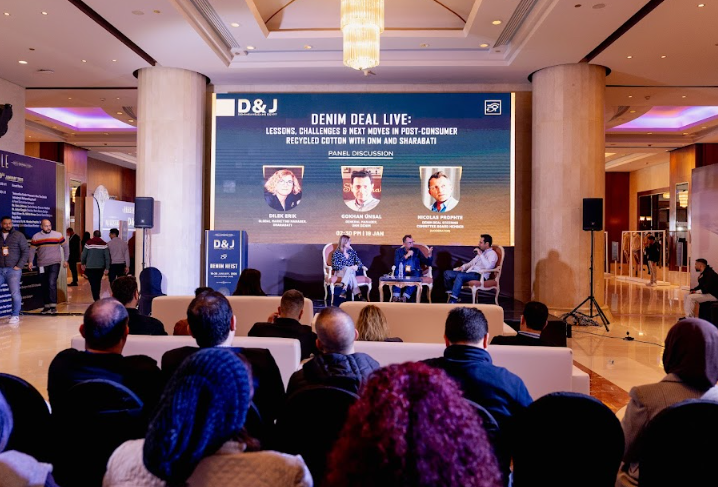
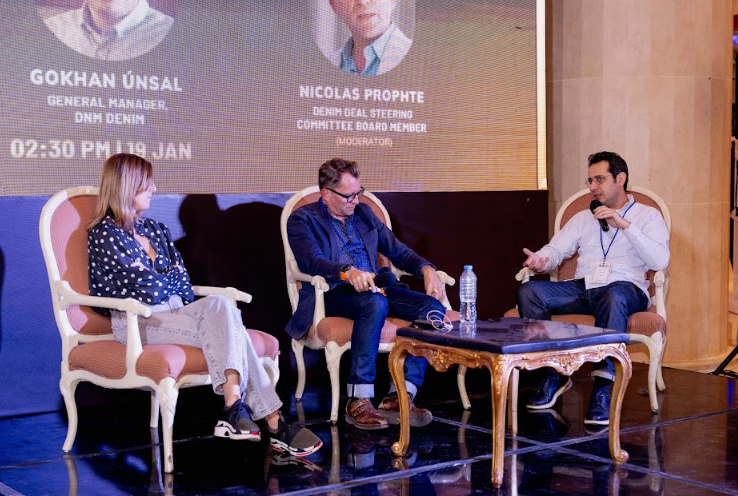
Later on Day 1, the panel “Denim Deal Live: Lessons, Challenges & Next Moves in Post-Consumer Recycled Cotton” took place. The discussion featured Mr. Gokhan Ünsal (DNM Denim) and Ms. Dilek Erik (Sharabati). It was moderated by Mr. Nicolas Prophte of the Denim Deal Steering Committee. The discussion addressed the realities of post-consumer recycled cotton, including challenges in scale, quality, and future direction.

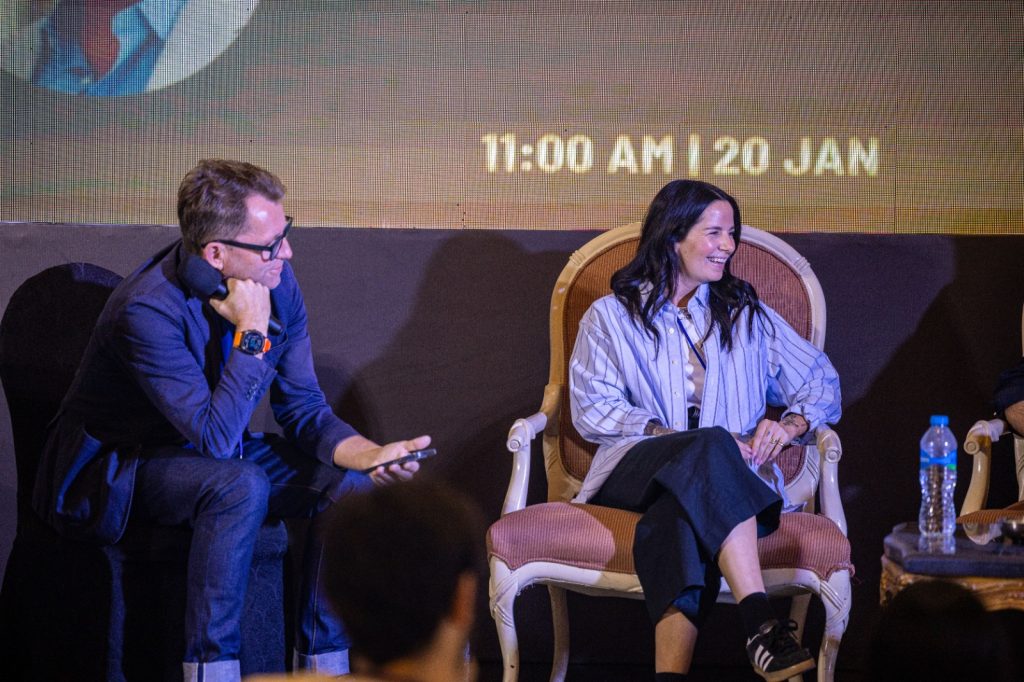
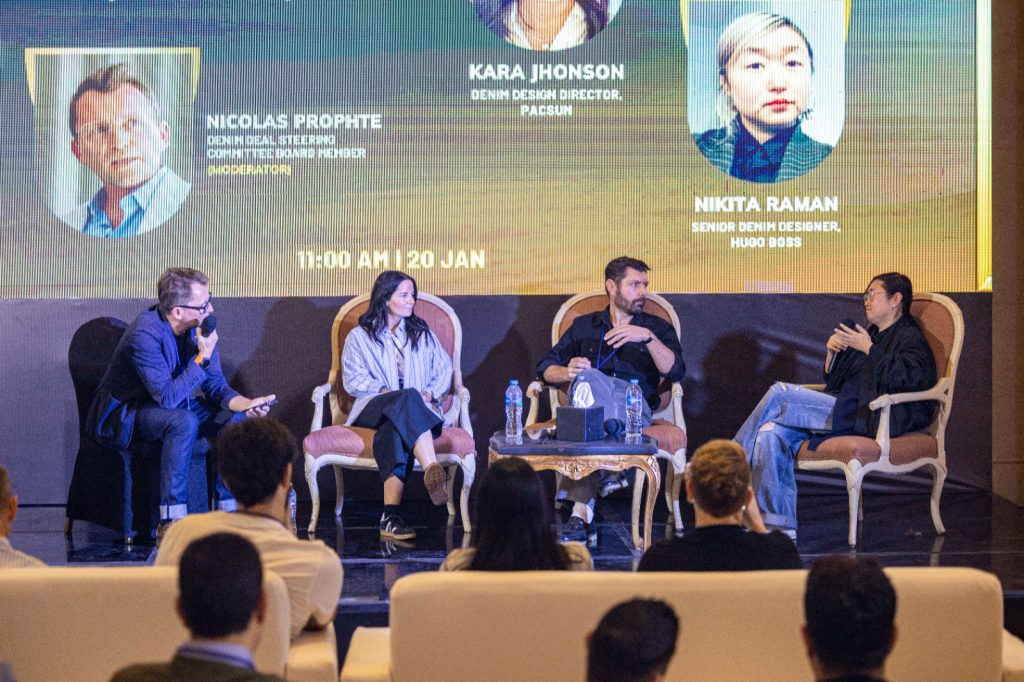
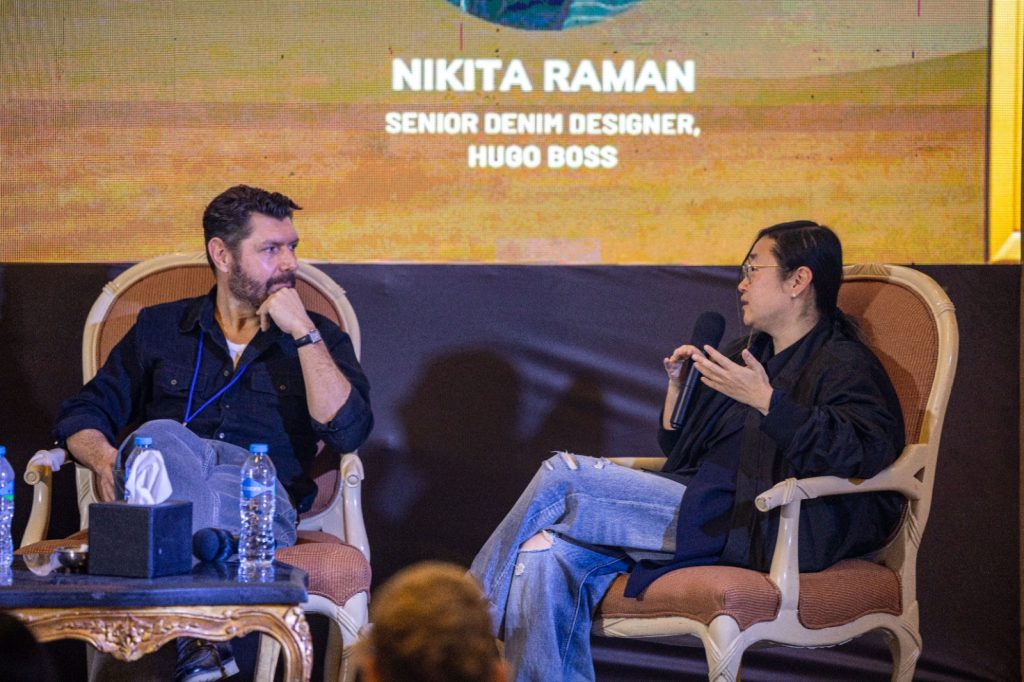
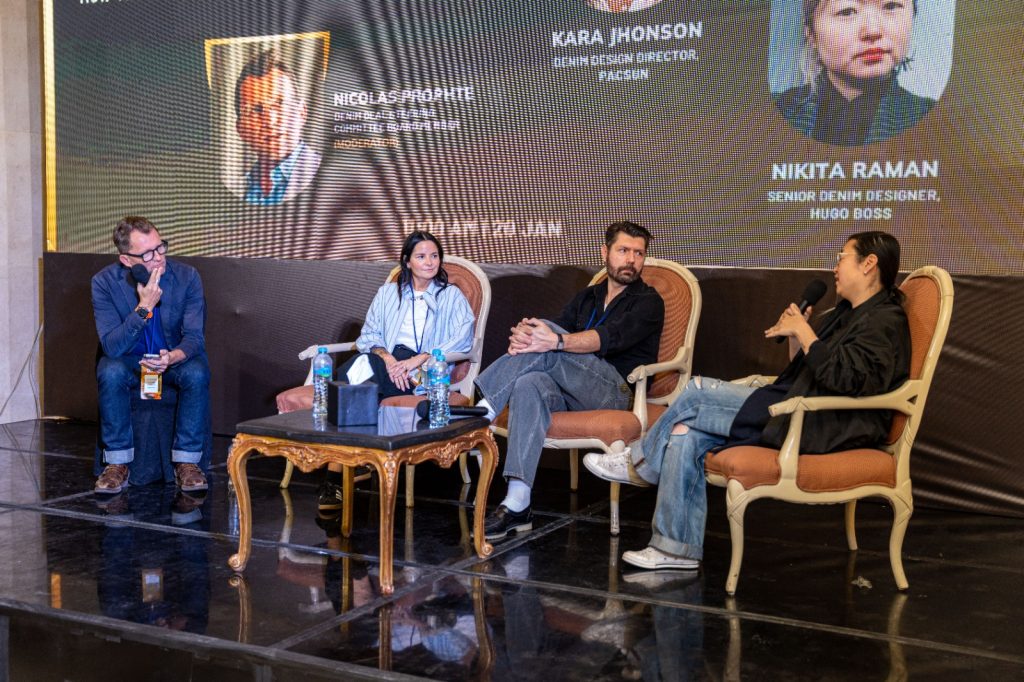
Day 2 opened with “Innovation Under Pressure: How the Denim Industry Is Reinventing Itself.” The panel featured Ms. Kara Johnson (PacSun), Mr. Autari Goggia (Rag & Bone), and Ms. Nikita Raman (Hugo Boss). The session was moderated by Mr. Nicolas Prophte. The panel examined how design, innovation, and sustainability are evolving amid cost pressures and changing consumer expectations.

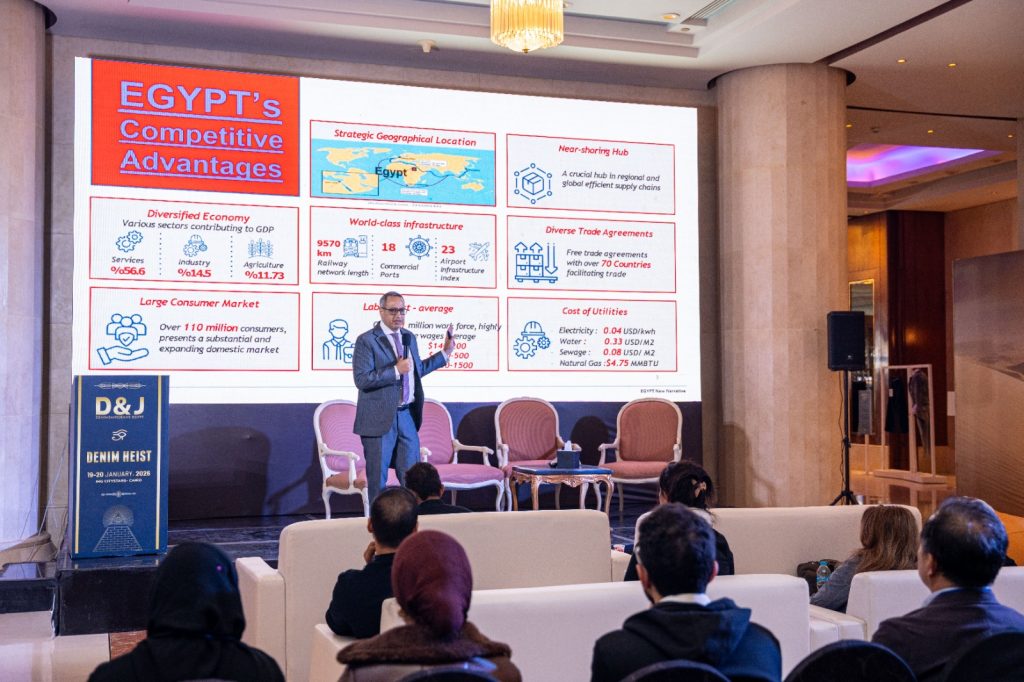
The program included a presentation by Mr. Ahmed Zohair, Director at GAFI’s Investment Promotion Sector. Titled “Egypt – Great Opportunities for Investment in the Textile and Apparel Industry,” the session outlined policy support, infrastructure development, and investment incentives available in the country.

Conclusion and Next Stops

D&J Egypt 2026 concluded on January 20, reinforcing its position as a focused platform for denim sourcing, innovation, and industry dialogue. The event highlighted Egypt’s growing role in the global denim ecosystem. It also supported collaboration between international brands, manufacturers, and solution providers.

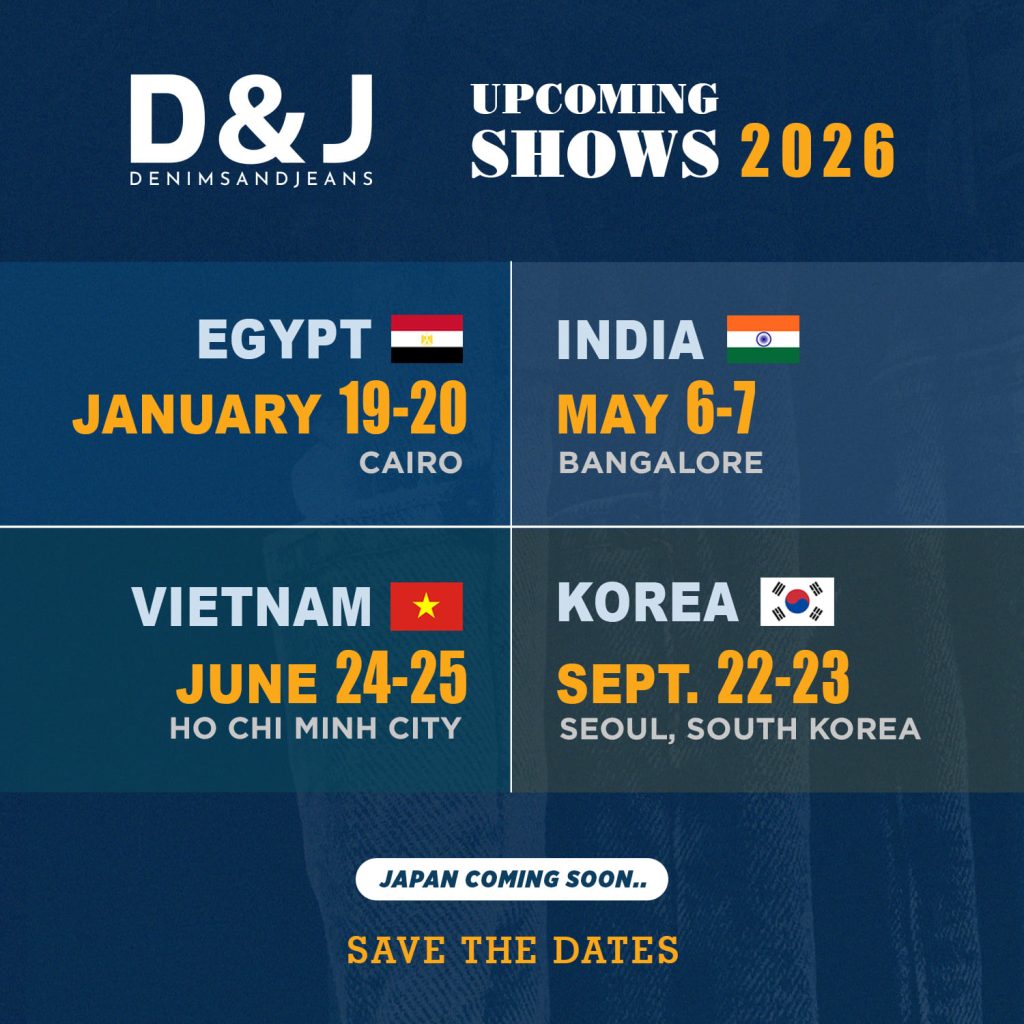
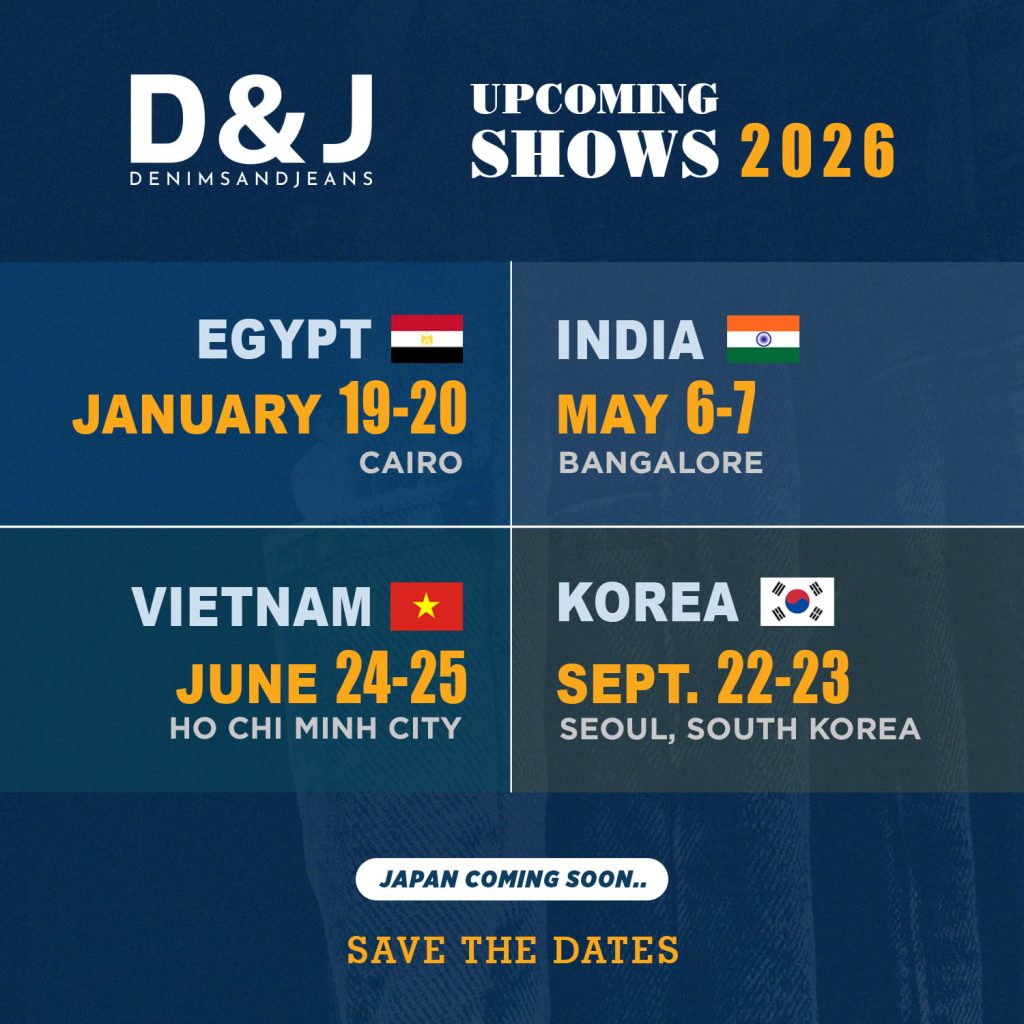
The Denimsandjeans tour continues with upcoming editions in India (May 6-7), Vietnam (June 24-25), and South Korea (September 22-23).

The post Denimsandjeans Egypt 2026: Post Show Report appeared first on Denimandjeans.

DENIM and PATCHES sourced this post originally published on this site
Filed Under: Blog

Egypt on the Global Denim Map: An Interview with Mohamed Gabr, CEO of LOTUSTEX

January 13, 2026 by DENIMandPATCHES

LOTUSTEX is a premium denim fabric manufacturer based in Egypt, operating a state-of-the-art vertical mill with a capacity of 14 million meters annually. Part of Lotus Garments Group, the company focuses on sustainable, innovative denim for global markets. D&J recently had an interview with Mr. Mohamed Gabr , CEO of LOTUSTEX and details are as below:

LOTUSTEX is a premium denim fabric manufacturer since 2018. Your Lotus group has been an important player in the Egyptian market . Please shed some light on your journey.

LOTUSTEX is having a state of art denim factory located in 10th of Ramadan which is 1 hour away from Cairo airport and producing 14 mil mts/year denim fabric . LOTUSTEX is a part of Lotus Garments and production of 18 mil garments annually  . We have started denim production to be first vertical mill of Egypt and investing to make sustainable , innovative products to serve our clients in US , Europe and other continents.

How important do you think Egypt is getting as a denim sourcing location.

Egypt is becoming more important with location , improved know how , population and costing advantage . We are in the heart of Africa and serving to Europe and USA with duty advantages, it give us motivation to invest in our business more and increase capacity . 

We thank you for joining for second time the Denimsandjeans Egypt show in 2026. What would be the most important products and offerings that you will make to the buyers in the show . 

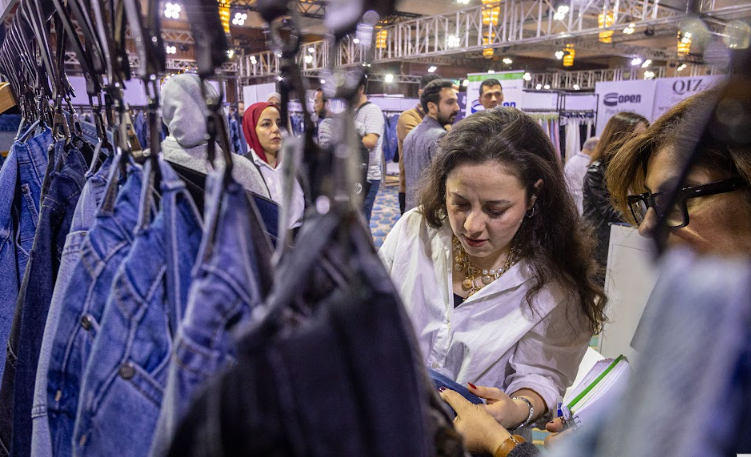
D&J show is very important for Egypt to explore capabilities and information to international brands , it is also best place to meet with denim community and when I checked exhibitors profile , it is a very nice combination . You can consider our Products in 4 main categories:

  • BLUE HERITAGE: Blue heritage is re-shaping 90’s legendary legacy with trendy vibes. It’s a new hybrid concept combining good memories in the past with today’s flexibility and sustainability. While showing Y2K fashion we are bringing comfort and softness by using special fibers and constructions with less water consumption.
  • CORAL-C: Coral-c is full of spring-summer vibes. Shiny like the sun, warm like the weather, drappy like the sea and colorful like the rainbow. A good color palette with shiny mid, light indigo shades and fresh colors from grey to black shades including functional fibers like Tencel, modal, linen and more…
  • R-CORD: Re-cord is timeless, seasonless and genderless commercial comfort str line aims to give max comfort with optimized colors and look without compromising authenticity. Extraordinary color combinations are giving a rich taste in fading out.
  • R-FORM: Re-form is a new denim performance scene that you can show all your flexibility by new tech with high performance which is reflecting like a second skin.

With the new sustainability legislations by EU , how would the brands’ demands on companies like yours would change . 

We are currently working with EU brands and adapting our compliance to brands requirement , it is very big change in the market for traceable products.  We adopt our production for brands requirement and also study for LCA . 

The most important sustainability technologies incorporated by you in recent times . 

We have solar energy ,water Recycling and waterless dying processes in our facility which is making us more sustainable for the green environment.  

How do you see the changing scenario affecting the business and how are you adapting to it .

We have a big advantage in Egypt after tariffs and it is giving us a positive impact in our business .We also continuously invest in our R&D to make most innovative fabrics and garments to serve our clients . 

We also use opportunity of vertical unit which is helping us to serve the brand in fastest delivery . 


Save Dates for Denimsandjeans (D&J) 2026

D&J Vietnam | D&J Egypt | D&J India | D&J Japan

Denim showDenim show

The post Egypt on the Global Denim Map: An Interview with Mohamed Gabr, CEO of LOTUSTEX appeared first on Denimandjeans.

DENIM and PATCHES sourced this post originally published on this site
Filed Under: Blog

Pakistan’s Denim Fabric Export – 2024 vs. 2025 | July To September – A Comparative Analysis

December 31, 2025 by DENIMandPATCHES

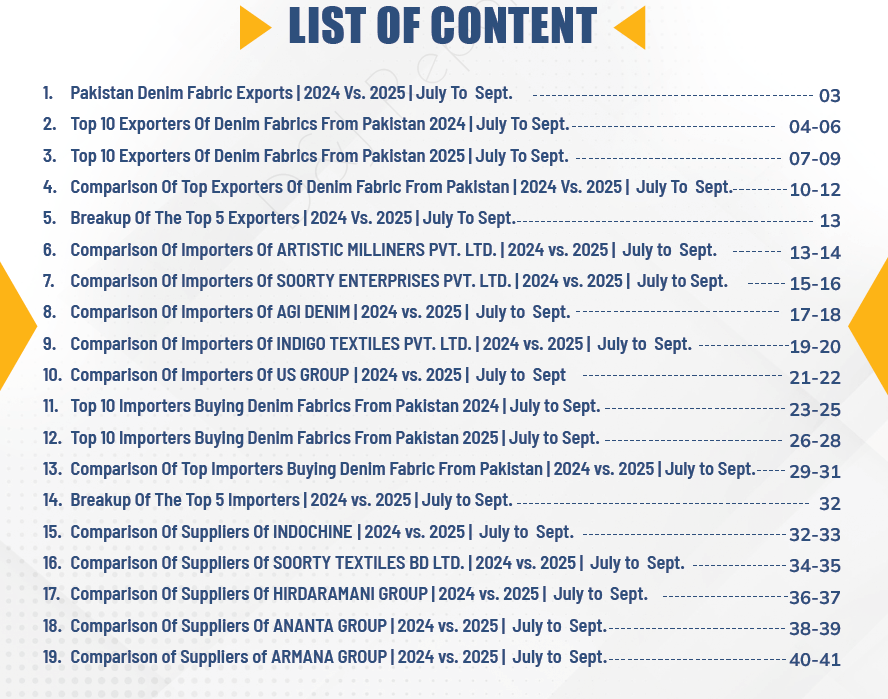
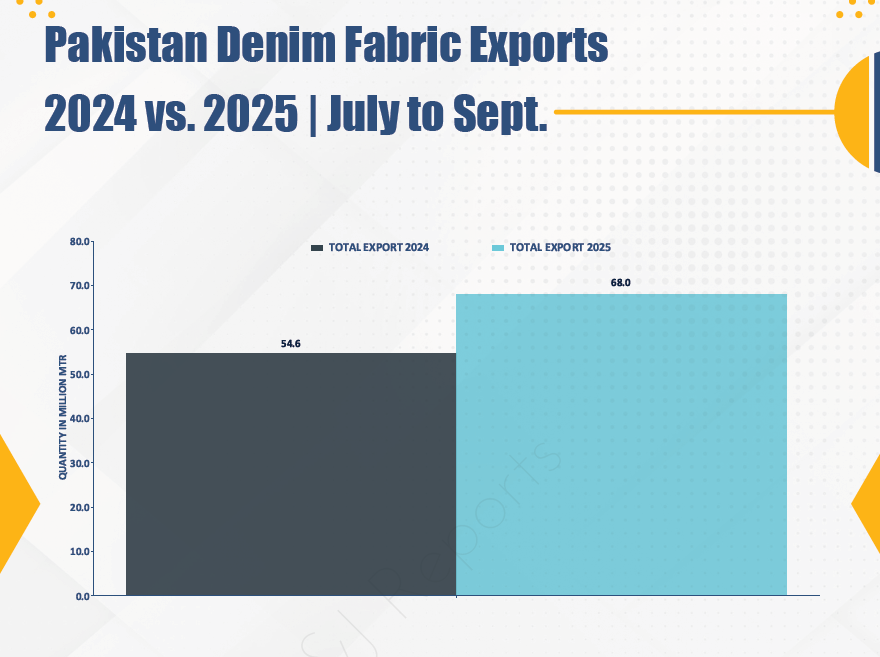
Pakistan’s denim fabric export landscape experienced crucial developments during the third quarter (Q3) of 2024 and 2025 (July to September). This period is pivotal for global supply chains, often setting the stage for year-end performance. As Pakistani exporters continue to strategically position themselves amidst evolving global trade patterns and competitive pricing pressures, a focused comparative analysis of the July to September data between 2024 and 2025 is essential. This detailed comparison will illuminate significant shifts in export volume, average pricing, and the concentration of major buyers, offering critical intelligence for sector-wide planning and future market penetration

Rest of the report is visible to our paid subscribers. In case you wish to contact us for more info at , send email at mktg@balajiinternational.com . To see all protected reports titles,visit this page http://www.denimsandjeans.com/subscriber-only-reports-3

The post Pakistan’s Denim Fabric Export – 2024 vs. 2025 | July To September – A Comparative Analysis appeared first on Denimandjeans.

DENIM and PATCHES sourced this post originally published on this site
Filed Under: Blog

KB Denim: Driving Innovation and Sustainable Growth in Egypt’s Denim Industry

December 24, 2025 by DENIMandPATCHES

KB Denim is a an egyptian manufacturer of high-quality, sustainable denim and gabardine fabrics. With advanced technology and global certifications, KB Denim creates innovative textiles that meet the needs of fashion brands worldwide.As they are participating in 2nd edition od D&J Eygypt , we had an interview with them to know more about them. Below is the complete information:

KB DENIM is one of the important denim mills in Egypt. Can you share with us your history and your plans for growth over the next few years?

KB Denim was founded after years of experience in the textile industry, when the Koudsi and Ballo families decided it was time to elevate their long-standing business to a new level. This strategic step led to the establishment of KB Denim, with a clear mission: expanding the supply of high-quality denim across the MENA region, Africa, and ultimately global markets. From day one, we built an integrated, innovative operation offering sustainable solutions, with full in-house control from spinning and weaving to finishing and delivery. This vertically integrated system has ensured continuous, stable, and high-quality production up to today.

Looking ahead, our growth plan focuses on three pillars:
– Innovation: introducing new denim designs and upgrading our finishing techniques.
– Sustainability: strengthening our water-saving efforts and expanding our recycled-
material programs.
– Market Expansion: strengthening our footprint in Europe, America and Africa while
developing new partnerships in emerging markets.

As a denim and gabardine producer, how do you see the current Egyptian market and how do you foresee its growth in the coming years?

The Egyptian market is experiencing a gradual but steady rise in demand for locally produced fabrics, especially as brands aim to shorten supply chains and rely less on imports. Denim and gabardine consumption is growing due to increased interest from global garment manufacturers and export-oriented factories.

In the coming years, we expect growth to accelerate, driven by:
– Government support for local manufacturing
– Growing interest in Egyptian-made textiles from Europe and Africa
– Rising adoption of sustainable fabrics
Egypt is well-positioned to become a stronger regional hub for denim and woven fabrics.

You are joining us again at D&J Egypt show in its second edition in Jan 2026. How was your experience in the first edition, and what new collections are you presenting this year?

Our first experience at D&J Egypt was extremely positive; it helped us connect directly with
global brands, regional manufacturers, and sustainability-driven partners. The show successfully highlighted Egypt’s potential as a denim sourcing destination.

For the 2026 edition, we will present fabric variation:
-Vintage delight: Authentic Denim aesthetics with more enhanced character, style and
elegance in daily life
-Cracky: Blending Casual with Classy outlook
-Slubs: Natural to special designed classy slubs with salt and pepper look
-Gabardin Complete color Pallete
-Performance Fabrics: strength , Durability, Moisture management, Thermo-regulation
With distinguished Colors
-Nile Silt and Stone : Earth Colors inspired by Egyptian Desert ( Sulfur )
-Blues: Unmatched indigo tones with impressive wash offs

And in terms of Sustainability:
– Energy Conservation Processes, Enhanced Life cycle of the Denim
– Ozone and Laser Friendly Fabrics, Recycled and upcycled materials.
– Innovative high energy efficient processes with least emissions and impact to the environment

As an Egyptian company with strategic geographic advantages, how do you
position KB DENIM for export markets, and what lead-time, logistic, or tariff
challenges do you face?

We position KB Denim as a strong, fast, flexible, and strategically located supplier for Europe, the Middle East, and Africa. Egypt’s proximity to major markets gives us competitive transit times, enabling quicker delivery and faster reaction to market demands.
As for our advantages, Egypt’s location gives us short lead-times to Europe, supported by strong regional logistics into the GCC and North Africa, as well as several free trade agreements that help maintain competitive tariffs. On the other hand, we mainly face minor challenges such as occasional shipping delays or longer transit times during busy seasons. However, we mitigate these challenges through strong logistics planning and diversified export routes.

Beyond certifications, can you share a specific sustainability project you’ve
implemented recently with measurable outcomes?

Recently, we completed an exciting upcycling project in collaboration with one of the most
active and prestigious design platforms in Egypt, Cairo Design District. Through this initiative, design students created unique dresses using denim and gabardine waste materials from our mill. The project not only showcased creative reuse of production leftovers but also highlighted the practical impact of upcycling in reducing waste and extending the life cycle of our fabrics.

The global denim/fabric market is highly competitive. What is your unique value
proposition compared to Turkey, India, Bangladesh, and Vietnam?

KB Denim’s competitive edge lies in:
-Vertical integration under one roof for reliable consistency and faster delivery
-Proximity to Europe enabling shorter lead-times
-Cost-effective production compared to many competitors
-Sustainable manufacturing aligned with global certifications
-Design agility we can co-create fabrics with brands quickly and efficiently
-Egypt’s strategic location offering logistical and tariff advantages in many markets
Together, these strengths allow us to offer a unique mix of quality and speed.

If you had to summarise KB DENIM’s future vision in one sentence, what would it be? And what is the next major R&D or investment taking you toward that vision?

Our vision is to lead the region with innovative, sustainable, and high-performance denim that transform ideas into reality.
Next major R&D or investment:
KB Denim is focused not only on today’s Needs but aware of the future challenges and the vision is not to sell the fabric but to be a leading denim company known for being innovative, customer focused and always be preferred Denim company.
KB believes R&D is the Key to be relevant in the market which makes us to fulfil todays and future needs Road Map Ahead and Investments Research and Development Incubation Centre

Covering:

-Evolution of the Denim Manufacturing Processes (Zero Carbon Foot print, Zero Water Discharge,
Water less process, Foams Application, etc).
-State of the Art New Denim Manufacturing Facility, vertically integrated having control on all
inputs to deliver customers service and satisfaction
-Post Consumer Waste Recycling projects
-Collaborations with Brands, Designers and the institutions
-Addition of More Performance Fabrics
-Addition of Digitalized processes for decreasing the process lead times and making higher end
Fabrics quick delivery possibilities
-Warp Knit Concept Denim Fabric for Athleisure


Save Dates for Denimsandjeans (D&J) 2026

D&J Vietnam | D&J Egypt | D&J India | D&J Japan

Denim showDenim show

The post KB Denim: Driving Innovation and Sustainable Growth in Egypt’s Denim Industry appeared first on Denimandjeans.

DENIM and PATCHES sourced this post originally published on this site
Filed Under: Blog

Interview with Mustafa Denizer: Inside the Global Growth of Diktas 

December 18, 2025 by DENIMandPATCHES

Exclusive Interview with CEO Mustafa Denizer

Diktas is a long-established company in Turkey’s sewing thread and yarn industry. Interview with Mustafa Denizer explores the company’s global growth through long-term investments, multi-country manufacturing, and strategic partnerships with leading brands.

As the textile landscape evolves, Diktas is expanding its international footprint. The company is adapting to rising demands for denim performance, sustainability, and responsible sourcing.

In this exclusive interview, CEO Mustafa Denizer shares insights into the company’s growth journey. He also discusses the impact of the QIZ framework, sustainability priorities, upcoming innovations, and Diktas’s strategic roadmap for the next five years.

Diktas has a long history in sewing thread and yarn production. How would you describe your core strengths today? And what has allowed you to grow significantly over decades?

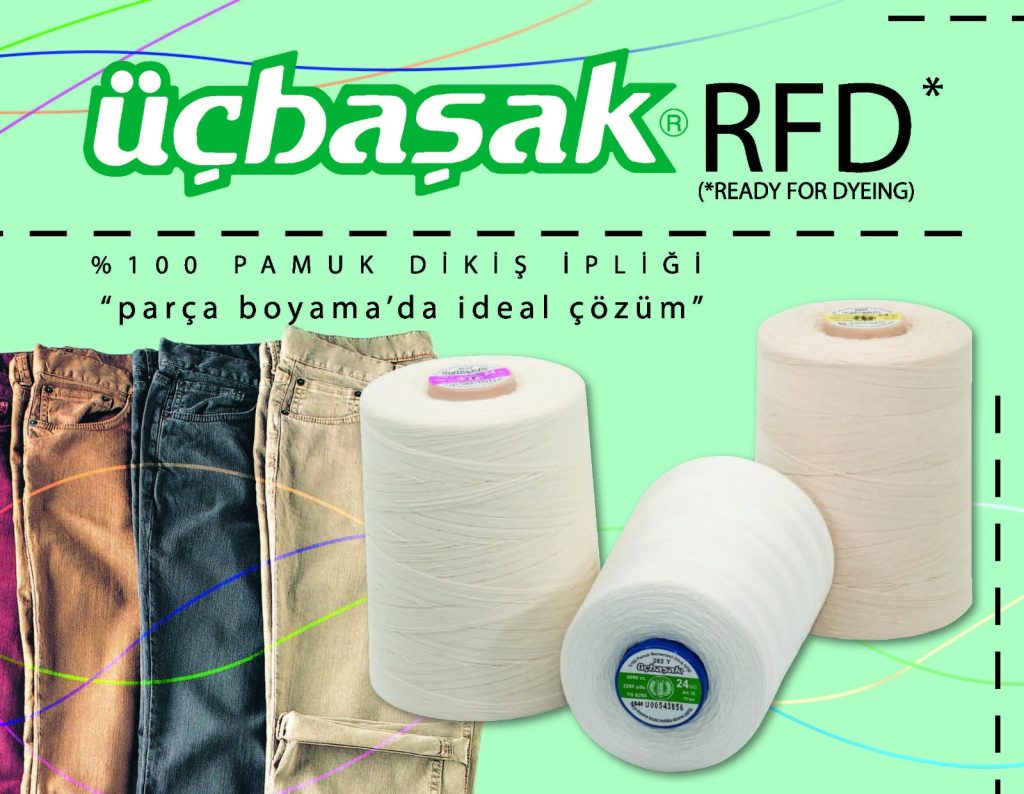
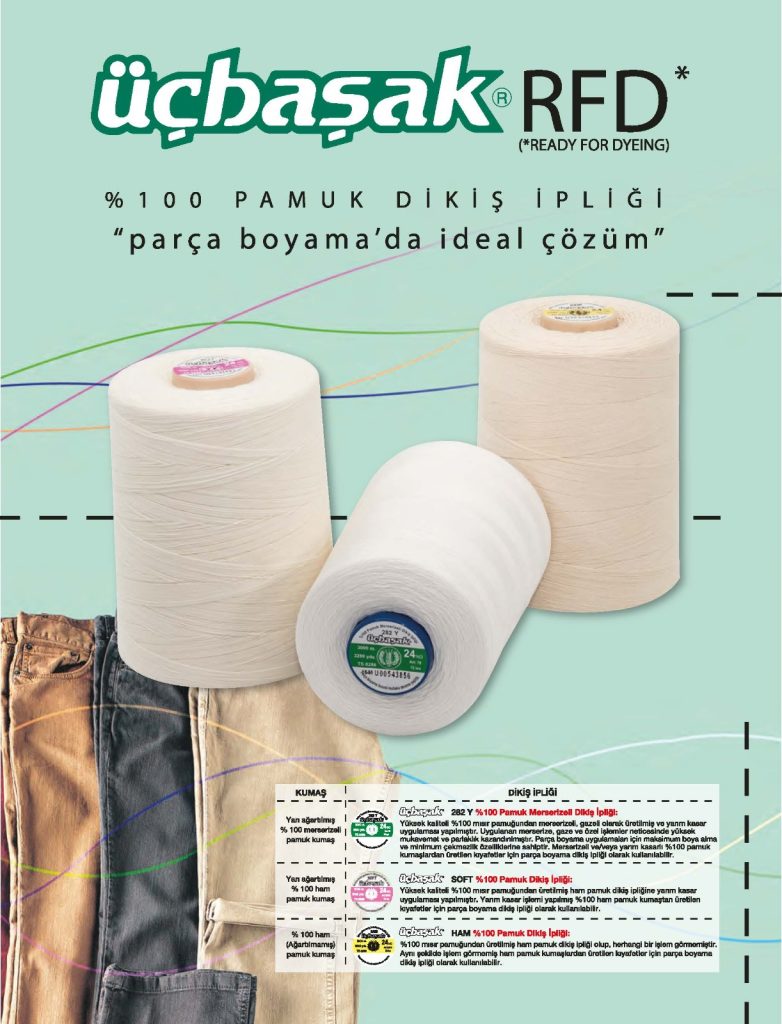
Diktas, founded in 1945, is an 80-year-old company deeply rooted in sewing thread production. In its early years, the textile industry was almost entirely cotton-based, and our operations reflected that landscape. As the sector transformed in the 1980s with the introduction of new fibers and technologies, Diktas evolved in parallel expanding its industrial thread portfolio while continuing to serve the hand-knitting and hobby markets, particularly products designed for women and end consumers.

This dual-market focus enabled us to build two long-standing brands with strong recognition in the Turkish market. One of our longstanding strengths is that nearly everything produced in our factories is sold under Diktaş-owned brands. We do not sell raw materials, and contract manufacturing has always been extremely limited. This approach created a healthy, balanced structure: a robust industrial thread range for apparel manufacturers combined with a strong consumer-facing hobby segment.

A major turning point came in 2007, when Diktas established a greenfield investment in Egypt. This facility continued to grow and helped transform the company into a multinational producer. The expansion opened doors to new markets, enabling us to sign licensing agreements and later enter strategic production partnerships with some of the world’s top thread and accessories manufacturers.

DiktaşDiktaş

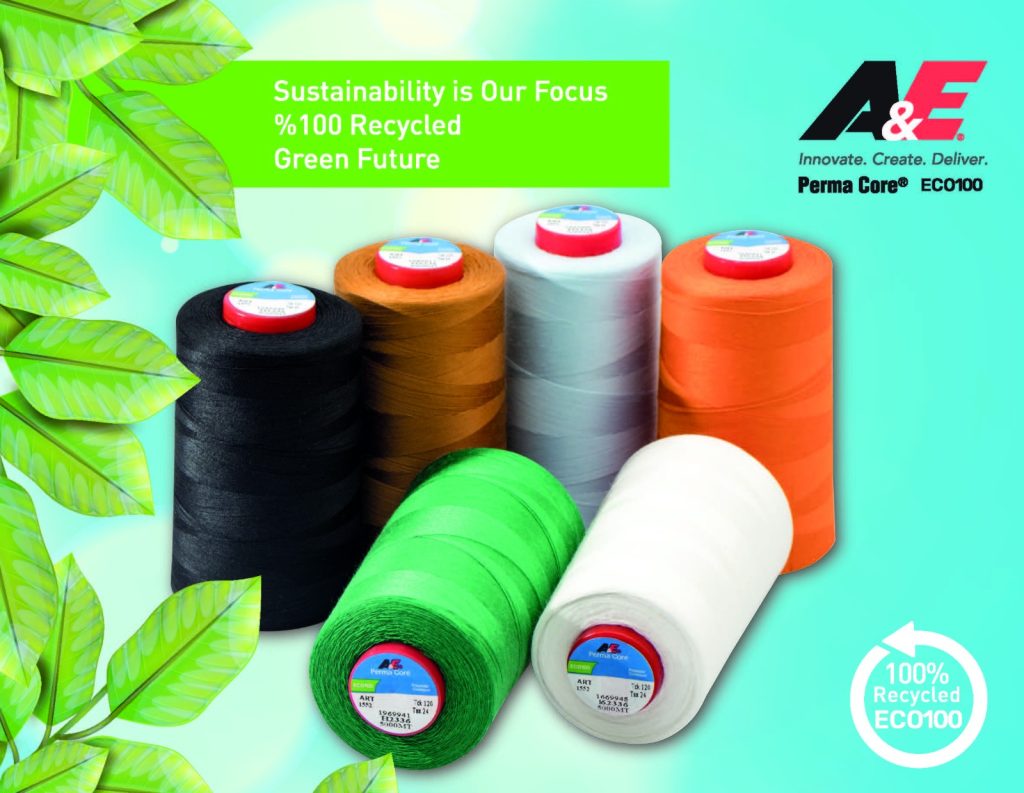
Today, our international partners include A&E, Gütermann, Wing Hing, Copen, and TAT Zippers. These collaborations began as licensing agreements and gradually deepened into strategic alliances that combine technical exchange, shared innovation, and market development. For us, working with these international brands has supported our technical development and market expansion.

Diktas is now transitioning into a five-country manufacturing group. In addition to Egypt, we have launched operations in two more countries, with a fifth planned in the coming years. We are also expanding our product ecosystem by adding new categories including items we do not produce ourselves but distribute through our established brand network.

Despite global demand challenges and rising input costs in Turkey, we continue to scale. Over the next five years, we project 50% growth driven by new factories, new product categories, and advanced technology partnerships. Diktas is expanding its international operations and strengthening its business structure.

Your product range includes industrial sewing threads, nylon/polyester threads, cotton threads, and hand-knitting yarns. Which of these categories has the most applications in denim, and how do you see this category growing, especially within the QIZ framework?

In denim, performance is everything. Because denim garments undergo intense washing, abrasion, laser finishing, tinting, and other demanding treatments, the threads must maintain exceptional durability, strength, and color consistency. For this reason, the leading thread types used in denim production are poly-core threads, high-tenacity polyester threads, and bonded polyester threads.

Today’s denim supply chains require not only durability but variety. Brands typically need five to six different thread types simultaneously to meet diverse stitching, strength, and texture requirements. Speed has also become a critical factor. Customers who once tolerated 10 – 12 week lead times now expect samples within days, salesman samples soon after, and bulk production delivered in 3 – 4 weeks. Diktas has built the rapid-response manufacturing model needed to support this new reality.

Within the QIZ (Qualified Industrial Zones) framework, the growth potential becomes even stronger. Historically, QIZ provided roughly a 30% cost advantage for Egyptian apparel exports to the U.S. With the recent tariff changes introduced under the Trump administration, Egypt’s competitiveness has increased even further. When combined with QIZ benefits, the total cost advantage can reach 30 – 50% compared to Bangladesh, Sri Lanka, China, or Vietnam.

While global demand softness is currently affecting overall export growth, the tariff structure positions Egypt for long-term expansion potentially 20% annual growth in U.S.-focused apparel exports.

Moreover, Egypt benefits from Mercosur, Agadir, and Euro-One trade agreements, making it a strategically well-connected sourcing destination.

As Diktas, we are now a key supplier across the QIZ supply chain. We aim to support customers with critical components – including sewing threads, zippers, pocketing fabrics, and buttons, contributing meaningfully to the 10.6% input requirement for QIZ-qualified manufacturers. This allows us to play a broader role within the QIZ supply chain.

Diktaş sewing thread manufacturerDiktaş sewing thread manufacturer

With the growing global emphasis on responsible sourcing, how does Diktas approach sustainability in raw materials, manufacturing processes, and environmental or social compliance?

For Diktas, sustainability is not a trend , it is an obligation. We view environmental responsibility as a core part of our operational approach. Our sustainability strategy encompasses major investments in green energy, reduced water consumption, improved production efficiency, and strict adherence to environmental and social compliance standards.

We continuously enhance our certification portfolio, and these certifications influence our operational standards and continuous improvement efforts.

The next major shift in the industry will be the expanded use of recycled products, and we are fully prepared. We have already implemented internal material recycling programs and are actively expanding our capabilities in plastics and packaging recycling.

Additionally, we work closely with our American partners to ensure our compliance systems meet world-class sustainability benchmarks. This collaborative, transparent approach strengthens our position as a responsible global manufacturer.

Thank you for supporting the D&J Show in Egypt. What are your thoughts on the show, and how can it become even more relevant for the Egyptian market?

From both an industrial and investment standpoint, events like Denimsandjeans play a crucial role in strengthening national textile ecosystems. When a country grows economically and industrially, companies like ours grow with it. Supporting such events is therefore both a responsibility and a way to contribute to the markets where we operate.

The show launched last year with great success, and it will be even stronger this year. Egypt’s denim sector is sizable and continues to expand. The event provides an important platform connecting manufacturers, suppliers, designers, and global brands.

What makes this show especially strong is the combined support of Egyptian ministries, local investors, and the Turkish textile community. This community views Egypt as a strategic market and contributes valuable experience to the platform.

Our long-term vision is to further professionalize and expand the event. We aim to strengthen links with international textile exhibitions and increase its value for the entire industry.

Denim ShowDenim Show

Looking at innovation, what will be the most important product categories for denim and non-denim segments?

For both denim and non-denim, we expect the core product groups of the past five years to remain dominant. In denim, key thread categories such as poly/poly, poly/cotton, nylon filaments, bonded threads, and chlorine-resistant dyeable threads will continue to lead. Their reliability during heavy washing and finishing processes remains critical.

In non – denim, cotton threads used in garment dyeing remain essential. At the same time, elastic threads are becoming more important as stretch fabrics gain market share.

Instead of dramatic changes in product composition, the next stage of competitiveness will revolve around service. Brands are demanding more color options, fewer standard models, faster sampling, and more complex decorative stitching. This means flexibility, speed, and technical reliability will be the true differentiators for suppliers.

Diktaş sewing thread manufacturerDiktaş sewing thread manufacturer
Premiere Vision ParisPremiere Vision Paris

Looking ahead 3 – 5 years, what are Diktaş’s priorities?

Our roadmap centers on ambitious growth of approximately 50% over the next five years. This will be driven by new factories, expanded markets, and additional product groups.

Diktas is on track to operate manufacturing facilities in five countries, giving us greater flexibility, resilience, and proximity to customers.

We plan to enter accessory and garment trim categories through joint ventures and partnerships – including pocketing, zippers, and buttons. Additionally, we are also preparing investments in specialized technical threads for high-value niche applications.

In short, Diktas is evolving into a wider and more international group. This growth is built on sustainability, multi-country operations, and a long-term strategic vision.

Register here to attend Denimsandjeans Egypt Show.


Save Dates for Denimsandjeans (D&J) 2026

D&J Vietnam | D&J Egypt | D&J India

Denim Shows
Denim Shows

The post Interview with Mustafa Denizer: Inside the Global Growth of Diktas  appeared first on Denimandjeans.

DENIM and PATCHES sourced this post originally published on this site
Filed Under: Blog

Top Denim & Apparel Manufacturers in Egypt | D&J Guide

December 18, 2025 by DENIMandPATCHES

Egypt has evolved from a 5,000-year-old textile legacy into a modern and sustainable production hub for denim & apparel manufacturers in Egypt. With duty free access to key markets, the country offers speed, reliability, and large scale capacity for denim, apparel, and textile buyers. Today, brands searching for “Egypt denim manufacturers” or “Egypt garment factories” find a competitive and future-ready ecosystem.

This article is a detailed guide to Egypt’s top denim and apparel manufacturers joining D&J Egypt second edition on January 19 – 20 , 2026. It highlights their capacities, sustainability efforts, and innovation strengths. Whether you are a global brand, sourcing head, retailer, or textile buyer, this guide offers a clear view of Egypt’s apparel landscape.

Egypt’s 5,000 – Year Textile Legacy: A Foundation for Modern Strength

Egypt’s leadership in textiles isn’t new, it is one of the oldest textile civilizations in the world.

Why Egypt Is Becoming a Global Sourcing Hotspot

Major brands from the US, EU, and the Middle East are shifting orders to Egypt. They are choosing the country for its faster lead times and stronger transparency.

  1. Proximity & Speed : Just 8 – 10 days to Europe, 15 – 20 to the US.
  2. Duty-Free Advantage : Access to EU, US, and 100+ other markets.
  3. Industry Strength : 6,000+ registered factories, 2.4M skilled workers.
  4. Denim Powerhouse : 30%+ of apparel exports are denim-related, with 80M+ jeans shipped yearly.

At D&J, they connect this ecosystem : mills, garment makers, brands, and innovators in a focused platform for sourcing and collaboration

Egyptian Denim Fabric & Apparel Manufacturers (Jan’26 Edition)

1. CRS Denim

CRS Denim is one of Egypt’s leading vertically integrated garment manufacturers. It carries forward the 85-year heritage of Cross Textiles. The company produces denim and woven garments such as jeans, shorts, dresses, skirts, and jackets.

At the D&J Show, CRS will showcase SS27 to AW27 collections featuring cloud bleaches, soft pastels, barrel and wide legs, laser details, and oversized fits.

The company has an annual capacity of 5.5 million garments. CRS also follows sustainability practices including organic and recycled fibers, low-impact washes, ozone and laser systems, nano-bubble technology, and closed-loop processes aligned with ZDHC, Higg FEM, GOTS, GRS, OCS, and RCS.

2. DNM Denim (Türkiye & Egypt)

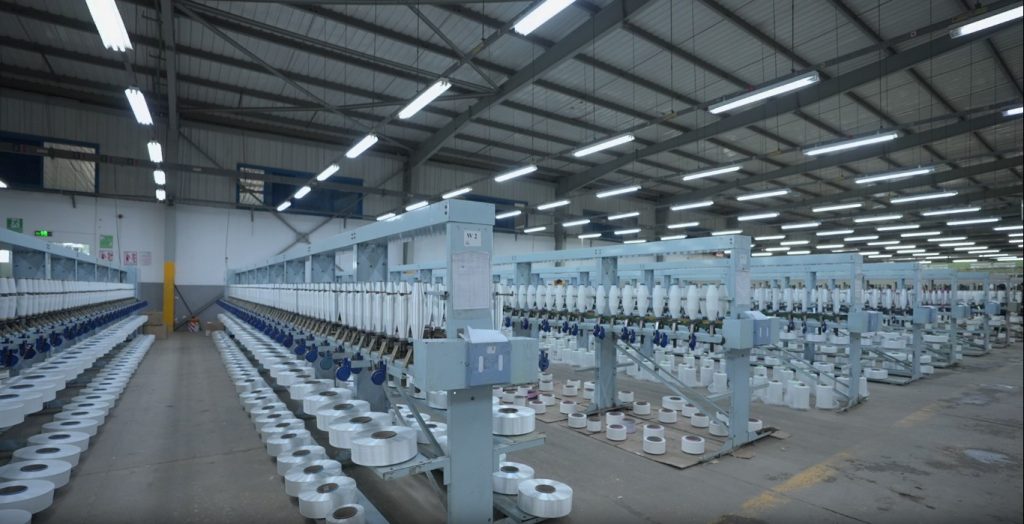
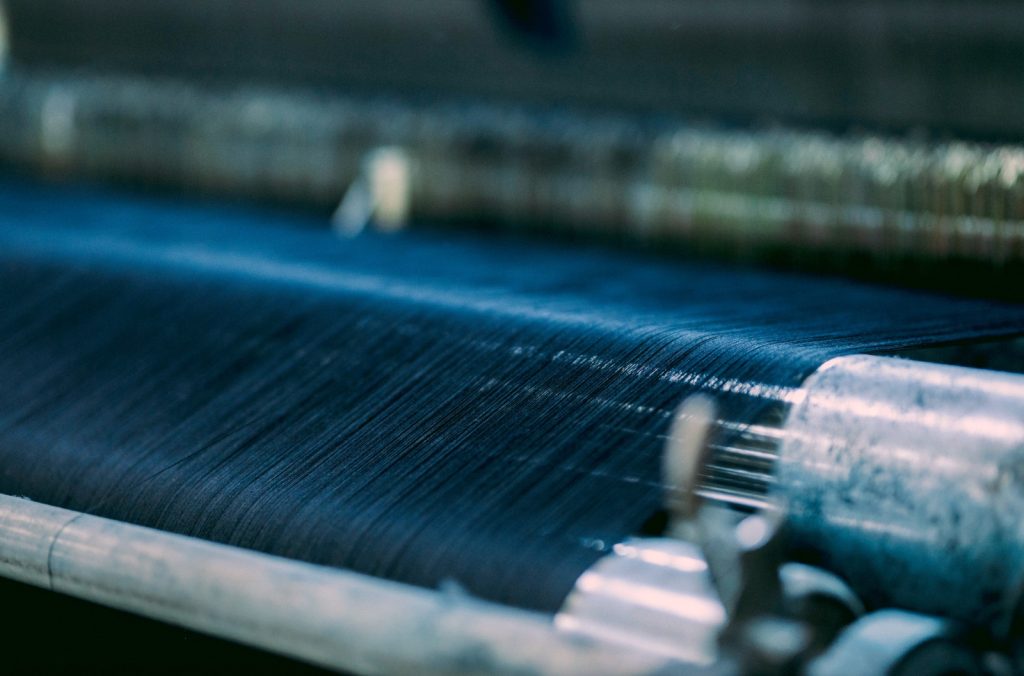
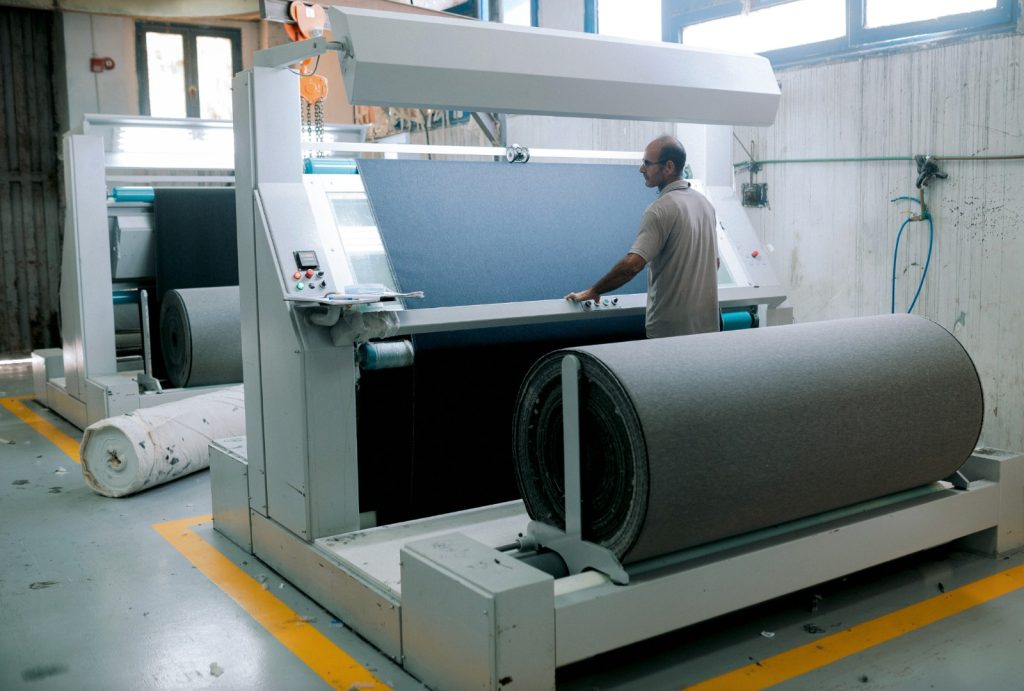
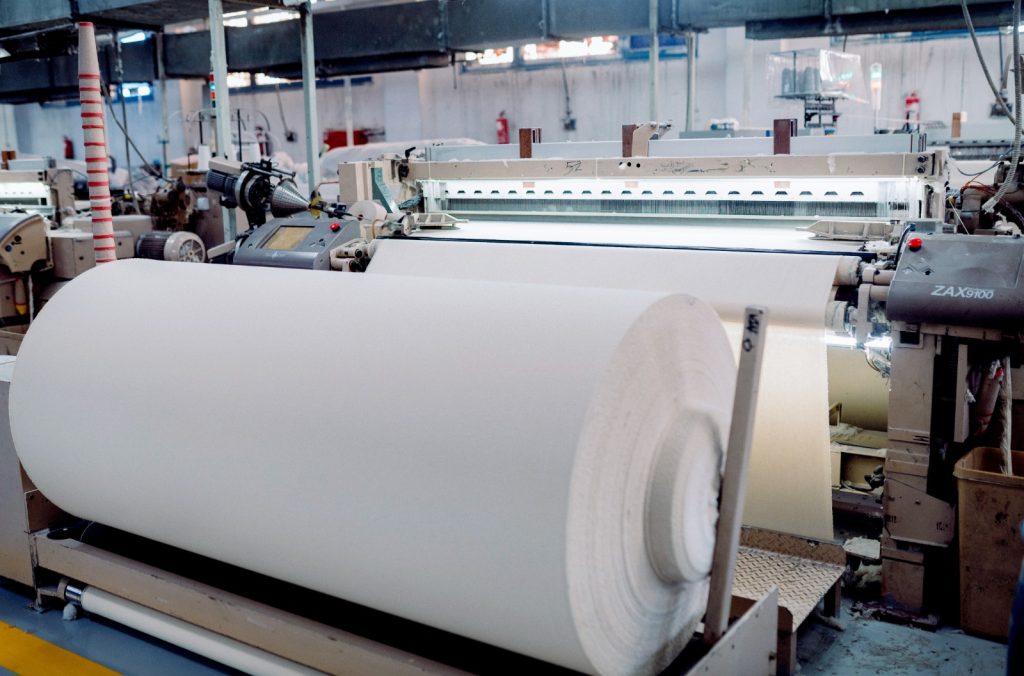
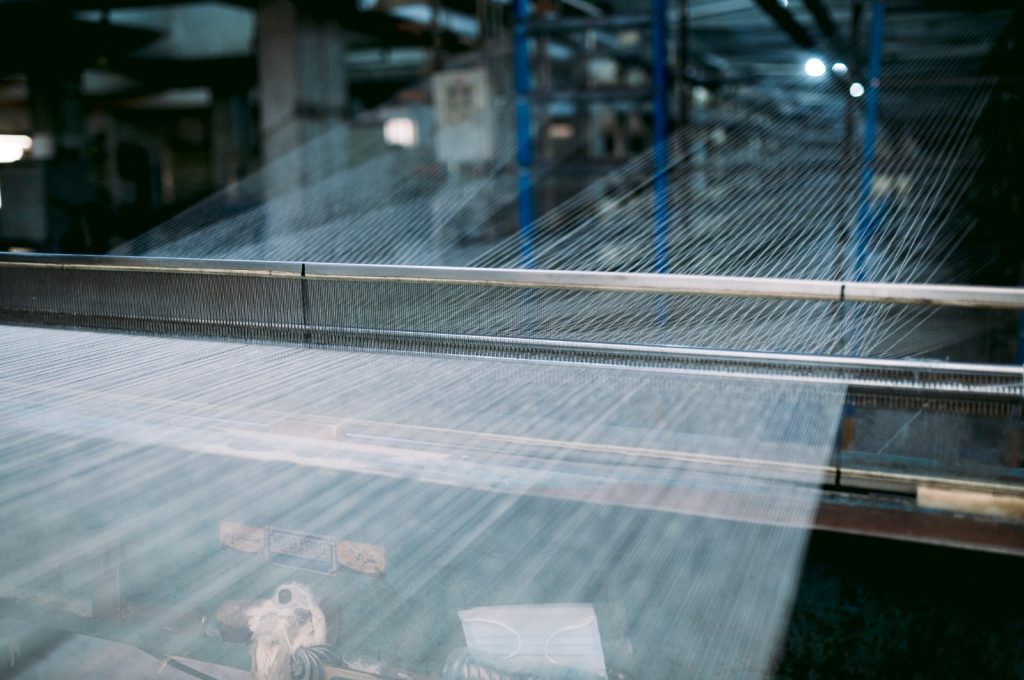
DNM Denim, established in 2011 in Damietta under Eroğlu Global Holding, manufactures a wide range of innovative denim fabrics. Their SS27 lineup features blends with Tencel™ and linen, lightweight constructions, and knit-look denims designed to enhance comfort and versatility. DNM operates a zero-discharge water treatment system, reflecting a strong commitment to sustainability, and holds an extensive list of global certifications including GRS, RCS, GOTS, Oeko-Tex, BCI, Higg, and ZDHC. The company has an annual production capacity of 42 million meters of denim fabric.

Read Interview with DNM from here.

DNM DenimDNM Denim
Denim ShowDenim Show
PV DenimPV Denim

3. Doteks-GNT

DOTEKS, operating under Dotextile, is a large-scale garment manufacturer in Egypt with an annual production capacity of 7.2 million pieces.

Doteks – GNT is recognized internationally for its high-quality denim garments and strong R&D capabilities in washing and fabric sourcing. The company manufactures denim bottoms, 5-pocket styles, tailoring products, and full top-and-bottom sets known for their craftsmanship and consistency. Doteks – GNT will display its denim and non-denim apparel ranges at the Denimsandjeans Egypt Show.

Top Denim & Apparel Manufacturers in EgyptTop Denim & Apparel Manufacturers in Egypt

4. EG Eroglu Garment

EG Eroglu is a prominent player in the Egyptian denim sector, producing premium jeans, shirts, skirts, and shorts with an emphasis on precision stitching, durable construction, and contemporary aesthetics. The show collection focuses on modern silhouettes enhanced by sustainable washing techniques and original trims that meet global quality standards. With an annual production capacity of 7.2 million units, EG Eroglu integrates eco-friendly practices including organic and recycled fibers, water-saving technologies, laser finishing, and ozone washing. The company further strengthens its process control through the EİLAR automatic chemical dosing system, optimizing quality and reducing environmental impact.

5. Eroglu

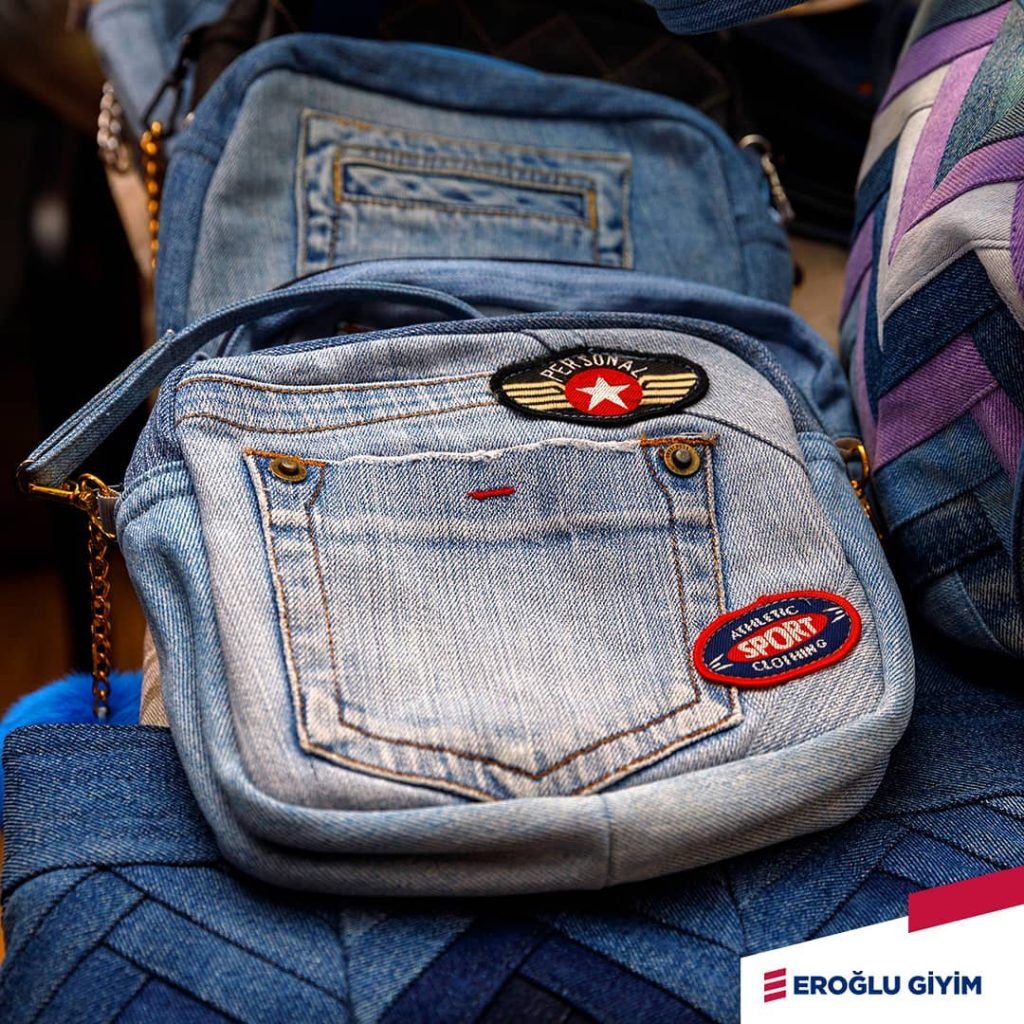
With manufacturing facilities in Istanbul, Aksaray, and Egypt, Eroglu Giyim supports numerous global brands while also producing for its in-house labels Collins and Loft. In Egypt, the company focuses on both denim and non-denim garment production at considerable scale, delivering up to 12 million pieces per year. Its sustainability efforts include water-off product development and the application of laser and ozone processes.

Top Denim & Apparel Manufacturers in EgyptTop Denim & Apparel Manufacturers in Egypt

6. GAID Denim Textiles

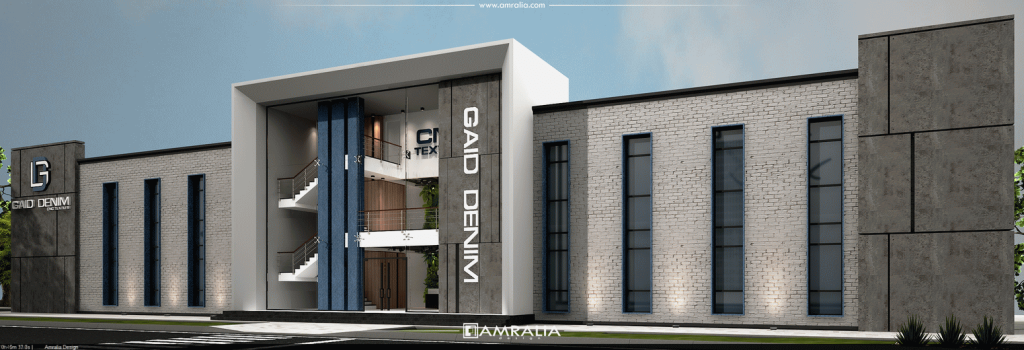
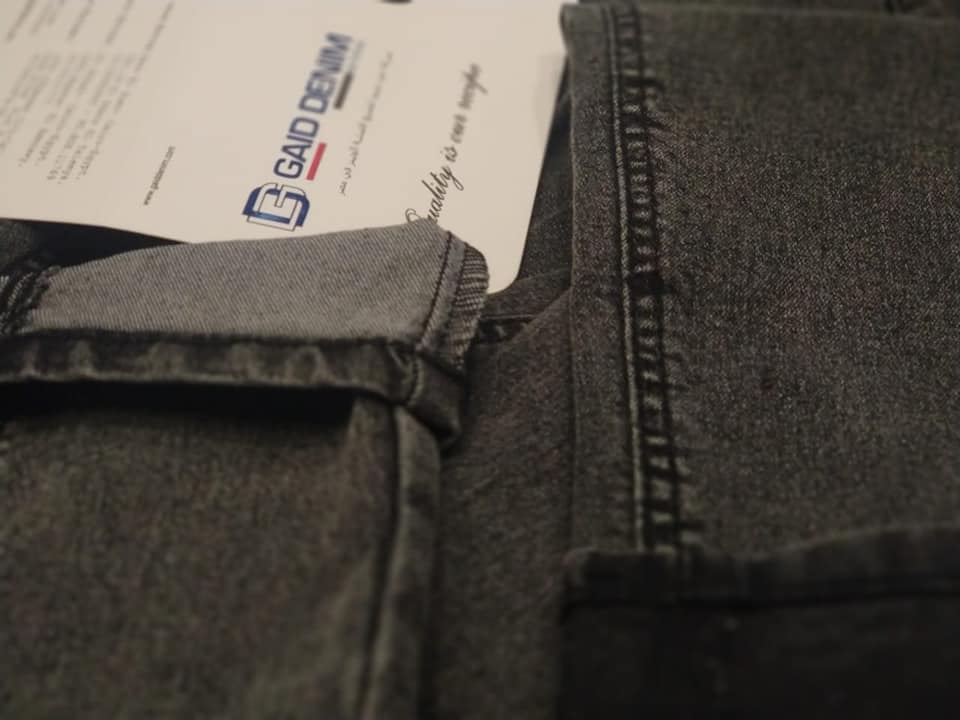
Gaid Denim Textiles specializes in modern denim fabric production using European machinery and offers a range of constructions including 100% cotton, cotton–lycra, and cotton–polyester blends. With an annual capacity of 7.2 million meters, the company aims to provide cost-effective and trend-aligned denim solutions. Gaid employs ultrasonic vat technology in its processes.

Top Denim & Apparel Manufacturers in EgyptTop Denim & Apparel Manufacturers in Egypt

7. G@S Jeans Factory

G@S Jeans Factory offers a diverse product range that includes denim and non-denim pants, dresses, shirts, and T-shirts for men, women, and children. The company operates with in-house washing, embroidery, printing, and laser services and has an annual production capacity of 2.4 million garments.

Top Denim & Apparel Manufacturers in EgyptTop Denim & Apparel Manufacturers in Egypt

8. GS Garments Egypt LLC

GS Garments is a technology-driven manufacturer known for eco-wash denim pants and woven bottoms. The company produces 14.4 million pieces per year using automated systems, smart hanging technology, and Jeanologia laser machines. GS supports sustainability by using organic and recycled fibers, laser finishing, and 3D or AI-based design tools. Its operations also run on solar power, with air-drying systems and wastewater treatment to reduce environmental impact.

9. Karnak Garments

Karnak Garments is an established producer of denim and non-denim apparel with strong global market presence. The company manufactures trousers, skirts, shorts, and jackets across genders with annual production capacity of 1.2 million units. Karnak emphasizes sustainable washing processes and is equipped with laser and ozone technologies.

Top Denim & Apparel Manufacturers in EgyptTop Denim & Apparel Manufacturers in Egypt

10. Kannan Tex

KANAANTEX is a Cairo-based supplier specializing in custom clothing labels and garment accessories. With a production capacity of around 350 million pieces anually, KANAANTEX offers a complete range of branding and labeling solutions, including woven labels, hang tags, heat seals, printed care labels, and plastic hangers. These products form the company’s core focus for the January 2026 D&J Egypt show.

KANAANTEX works in line with global sustainability and compliance standards and holds certifications such as FSC, GRS, SMETA, FAMA, and ISO, supporting responsible sourcing and production practices across its operations.

11. KB Denim

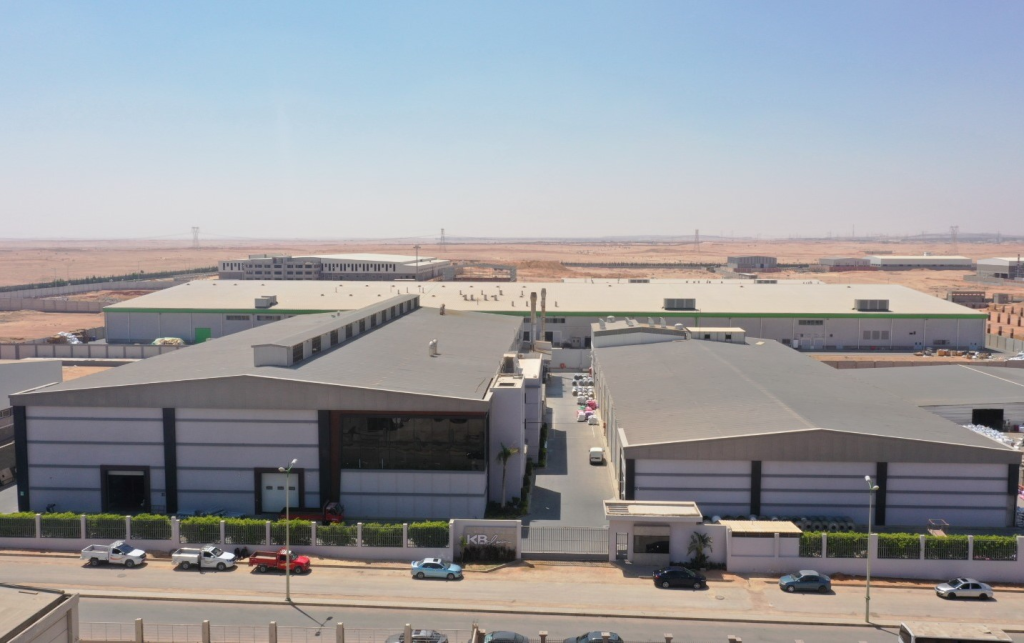
KB Denim produces denim and gabardine fabrics with an annual capacity of 14 million meters and holds a wide range of global certifications, including GRS, GOTS, OCS, RCS, the Higg Index, SEDEX, WRAP, OEKO-TEX, and ISO.

KingpinsKingpins

12. KCG Textile

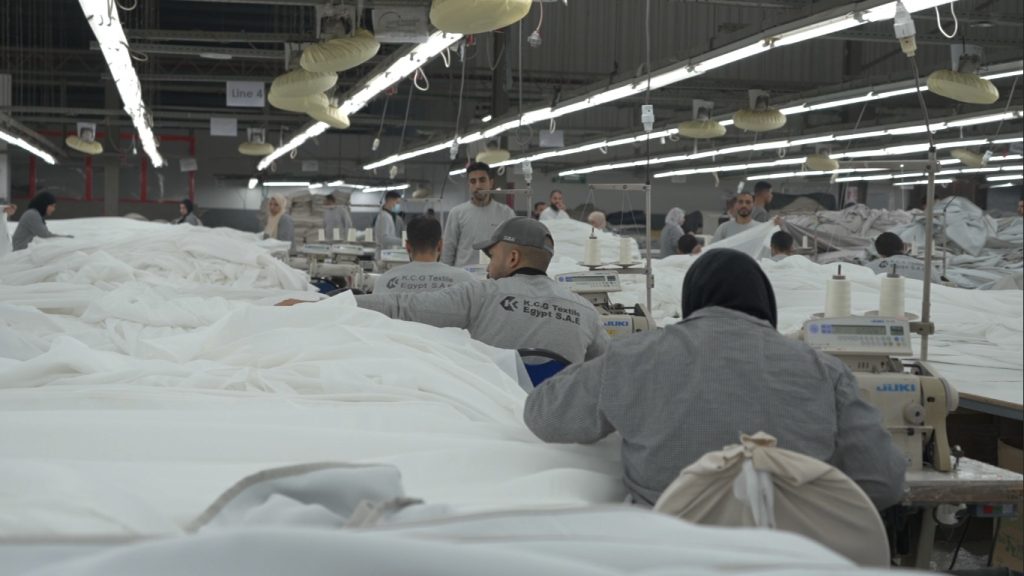
KCG Textile is a full-cycle apparel manufacturer offering services from fabric sourcing to finished garment production, with a specialization in womenswear. With an output of 3.6 million pieces per year, the company supports large-scale sourcing needs while championing sustainable practices. KCG utilizes recycled polyester blends and responsibly sourced fibers, contributing to circularity in fashion. The company has also launched a Textile-to-Textile (TT) recycling program that converts production waste into 20 tons of recycled fiber daily, and provides PVC-free printing solutions as an eco-friendly alternative.

13. Lotustex

Lotustex, backed by 30 years of Lotus Group expertise, has grown into a strong producer of sustainable denim fabrics. The company has a capacity of 14.5 million meters per year. It focuses on eco-friendly materials, including organic, regenerative, and recycled cotton, and uses laser-friendly color technologies.

Lotustex runs an advanced sustainability setup, sourcing 71% of its energy from solar power. It also recycles 85% of its wastewater through modern clean-energy and water-reuse systems.

Lotus Garment DenimLotus Garment Denim

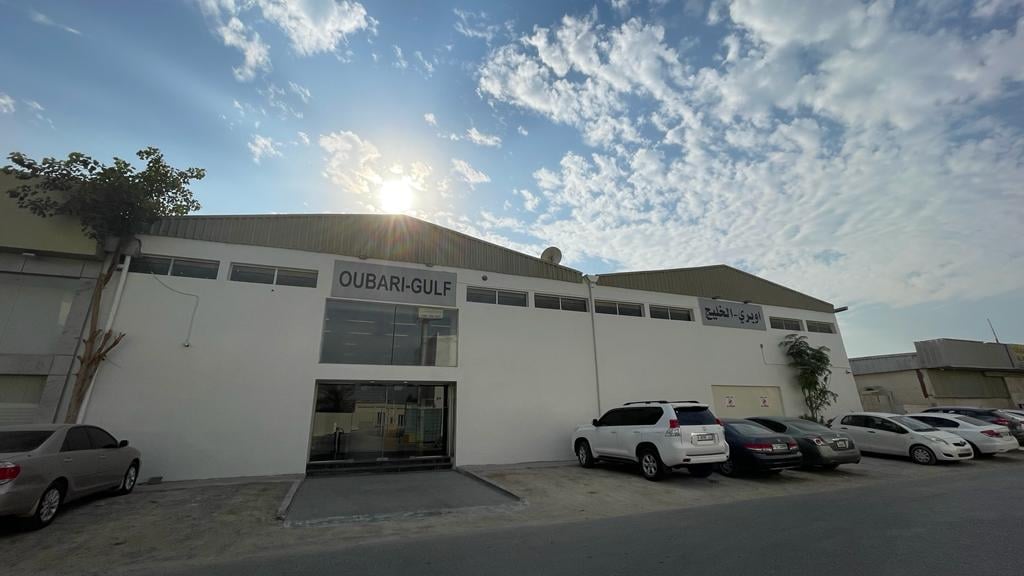
14. Oubari

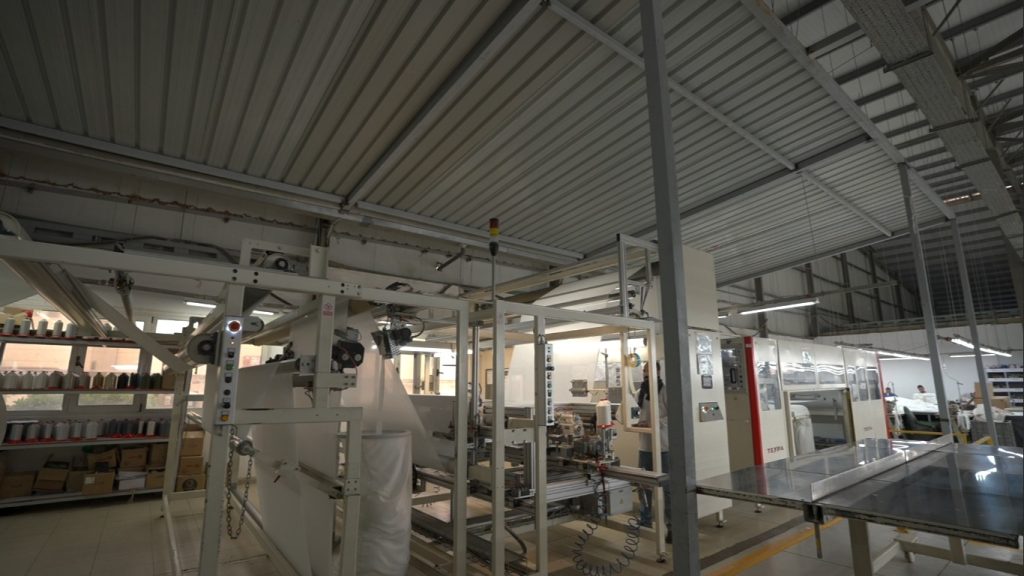
Oubari Egypt is a key machinery supplier to the country’s apparel and textile sector. The company represents global brands in sewing, spreading, and cutting technologies. It also carries certifications from partners such as Groz Beckert, VBM, Bullmer, and Bruce.

top Apparel Garments and fabrics in Egypttop Apparel Garments and fabrics in Egypt

15. Printex Esaam

Printex operates across weaving, dyeing, and garment manufacturing, offering denim and gabardine fabrics alongside ready garments across menswear, womenswear, and kidswear categories. With an annual production capacity of 1.2 million garments, Printex caters to a wide market while maintaining Oeko-Tex certification for product safety.

  • Denim ShowDenim Show
  • Denim ShowDenim Show
  • Premier Vision Premier Vision
  • top Apparel Garments and fabrics in Egypttop Apparel Garments and fabrics in Egypt
  • top Apparel Garments and fabrics in Egypttop Apparel Garments and fabrics in Egypt

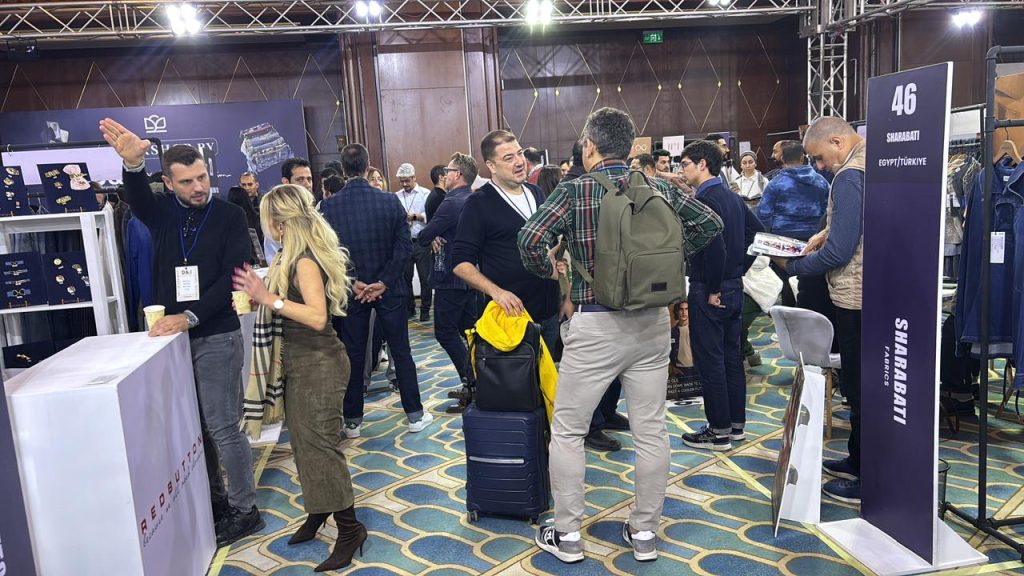
16. Sharabati Denim

Sharabati Denim, founded in 1978, is one of the region’s most established textile groups. The company produces over 140 million meters of fabric each year. Its portfolio includes premium denim, flat fabrics, artisan selvedge, high-stretch styles, and blends made with Giza 94 cotton.
At the show, Sharabati will present its seasonal concepts – Goodole, Verso, Coolr, and Loomers along with the Twillis flat-fabric line.

Sharabati is committed to sustainability and uses regenerative cotton, recycled materials, hemp and linen blends, photovoltaic energy, caustic soda recovery, and advanced water-recycling systems.

  • Sharabati DenimSharabati Denim
  • Sharabati DenimSharabati Denim
  • Sharabati DenimSharabati Denim
  • PV DenimPV Denim
  • KingpinsKingpins

Where to Meet These Manufacturers

Egypt’s top mills and factories can be met in person at D&J Egypt, bringing together the most reliable denim & apparel manufacturers in Egypt under one sourcing platform.

The event connects Global brandsm , Egyptian manufacturers , Denim mills , Garment factories , Sustainability innovators , Technology providers.

The show is designed to support Egypt’s long-term export growth and strengthen buyer – supplier relationships through curated networking, B2B meetings, and knowledge sessions.

With thousands of years of textile heritage and a rapidly modernizing supply chain, Egypt stands at a decisive moment. Whether it’s speed, sustainability, cost-efficiency, or craftsmanship, Egypt has become one of the world’s most promising sourcing destinations for denim and apparel.

As global demand accelerates toward nearshoring, transparency, and sustainable manufacturing, Egypt is uniquely positioned to scale.

For brands seeking reliable, certified, high-quality suppliers, these denim & apparel manufacturers in Egypt represent the very best the country has to offer.


Save Dates for Denimsandjeans (D&J) 2026

D&J Vietnam | D&J Egypt | D&J India

Denim Shows , Denim Exhibitions , Denim Events Denim Shows , Denim Exhibitions , Denim Events

The post Top Denim & Apparel Manufacturers in Egypt | D&J Guide appeared first on Denimandjeans.

DENIM and PATCHES sourced this post originally published on this site
Filed Under: Blog

  • « Go to Previous Page

  • Page 1
  • Interim pages omitted …
  • Page 4
  • Page 5
  • Page 6
  • Page 7
  • Page 8
  • Interim pages omitted …
  • Page 23
  • Go to Next Page »

Footer

Search

Tags

12 STEPS AA ALCOHOL apparel BABY BABY JACKET closth clothes comfortable custom custom embroidered CUSTOM EMBROIDERED PATCH DENIM DENIMandPATCHES DENIM JACKET denimjacket JACKET PATCH patches technology your mom

Recent

  • Katseye Reworks Coachella’s Minimalist Boot Formula With Buckles, Bows and Lace
  • Alaïa Denim Ad Campaign – Spring 2026
  • Shuffle Board: Kendra Scott Taps CFO as Tapestry Expands Board
  • The Legacy of Adriano, and the Uncertain Future of the UHR
  • Good American x Dolly Parton Collaboration

Shopping

  • Shop DENIMandPATCHES
  • Terms & Conditions
  • Return Policy
  • Your Privacy
  • we sell DENIM and PATCHES
  • Funny
  • Mature
  • Wholesome
  • Cart
  • How To

Copyright © 2026 · DENIMandPATCHES.